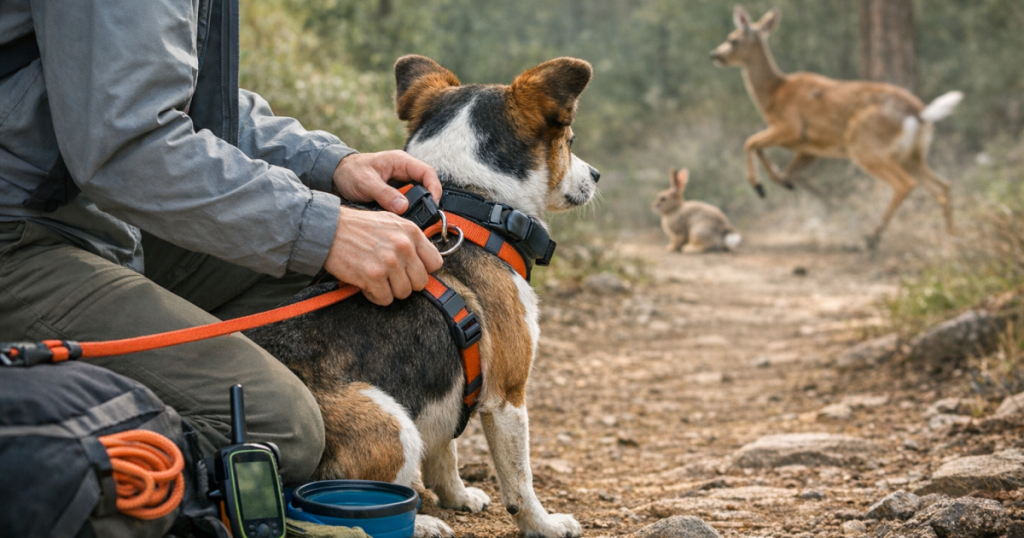
A deer crossing the trail can turn a calm walk into a sprint in less than a second. The safest way to prevent dog escapes during hiking is to treat wildlife chases as a predictable risk, not a rare surprise: manage distance, equipment, recall practice, and recovery backup before your dog ever sees the animal. You do not need to hike nervously; you need a routine that still works when your dog’s brain says “squirrel” and their ears temporarily resign.
Wildlife injuries, suspected bites, and post-chase symptoms such as limping, heavy panting, or collapse should be assessed by a licensed veterinarian, and any wildlife contact or park incident should be handled according to local regulations and land-manager safety rules.
In brief
Most wildlife-chase emergencies start before the dog bolts. A loose harness, a long line dragged through brush, a recall cue used too late, or a tracker left uncharged can all turn a normal trail distraction into a missing-dog search. The goal is not to remove every risk from outdoor life. The goal is to stack small safeguards so one bad moment does not become a long night.
- Use a leash or long line in high-wildlife areas, even if your dog has decent recall.
- Fit escape-resistant gear before the trail, not after your dog starts pulling backward.
- Practice interruption cues around mild distractions before expecting them to work near deer, rabbits, livestock, or birds.
- Carry visible ID, a charged tracker if you use one, and a simple search plan.
- Know when to stop hiking and shift into recovery mode.
Step 1: Read the trail before your dog does
Dogs usually notice wildlife before people do. Watch for the clues that come just before a chase: a sudden frozen posture, ears locked forward, tail lifted, nose high in the air, or rapid scanning from side to side. These are not small personality quirks on a hike. They are early warning signals.
When you see them, shorten the leash calmly, move your dog off the center of the trail, and create distance from the trigger. Do not wait until the animal runs. Movement is often what flips curiosity into pursuit.
High-risk places include dawn and dusk trailheads, wooded creek crossings, meadow edges, campgrounds with food scraps, and quiet gravel roads where deer may feed near the shoulder. In these areas, assume wildlife is present even if you cannot see it yet.
Step 2: Use gear that stays on when your dog reverses, twists, or lunges
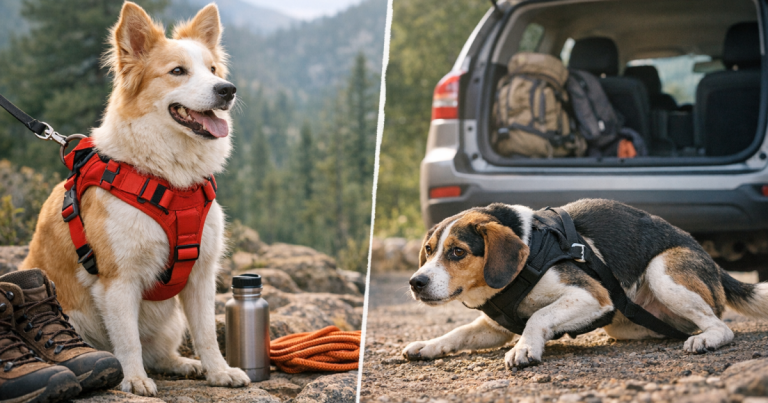
A chase rarely happens in a neat straight line. Dogs may leap forward, spin, back out of pressure, or drag a line around a sapling. Before hiking, check the fit of the collar, harness, and leash attachment while your dog is standing, sitting, turning, and backing up.
For dogs with narrow heads, deep chests, or a history of slipping gear, a standard flat collar may not be enough for trail work. A well-fitted harness with secure adjustment points can reduce the chance of a panic slip, and some dogs do best with both a harness and a separate ID collar. If your dog has escaped from ordinary walking gear before, review trail and travel harnesses designed for dogs who slip out before your next hike.
Do a two-minute pre-hike fit check: you should be able to fit fingers under the straps without loose gaps, the leash clip should not twist the harness sideways, and the dog should not be able to duck a shoulder free when gently guided backward. Gear that looks fine in the driveway can behave differently once a dog is excited, wet, muddy, or pushing through brush.
Step 3: Treat recall as a managed behavior, not a guarantee
Recall is valuable, but it is not a magic stop button. A dog who comes beautifully in the yard may struggle when a rabbit breaks cover ten feet away. Build a trail routine that rewards checking in before the chase begins.
- Reward voluntary eye contact and turns back toward you during the hike.
- Use one clear recall cue, not five increasingly worried versions of the same word.
- Practice on a long line in open areas before trying more distracting routes.
- Pay heavily for turning away from birds, squirrels, or distant movement.
- End the session while your dog is still succeeding instead of pushing until they fail.
If your dog is already staring, crouching, or loading up to sprint, switch from recall to management. Shorten the line, change direction, step behind a visual barrier, or scatter a few treats on the ground to bring the nose down and break the stare. You are not bribing bad behavior; you are interrupting the chase sequence before momentum takes over.
Step 4: Decide your leash rules before the trail gets interesting
The hardest decisions happen when everyone is relaxed. Your dog has been polite for two miles, the trail looks empty, and off-leash freedom feels tempting. That is also when owners often miss the first deer, turkey, or coyote moving through the trees.
Set rules in advance. For example, your dog stays leashed within a quarter mile of the trailhead, near roads, around campgrounds, near livestock, at water crossings, and any time visibility is limited. If you use a long line, hold it rather than letting it trail loose in brush where it can snag or disappear with the dog.
Public lands, state parks, national parks, and wildlife areas may have leash requirements. Follow posted rules even if your dog is friendly. Leash rules protect wildlife, other hikers, and your dog from the kind of split-second pursuit that is difficult to interrupt once it starts.
Step 5: Make your recovery backup boringly reliable
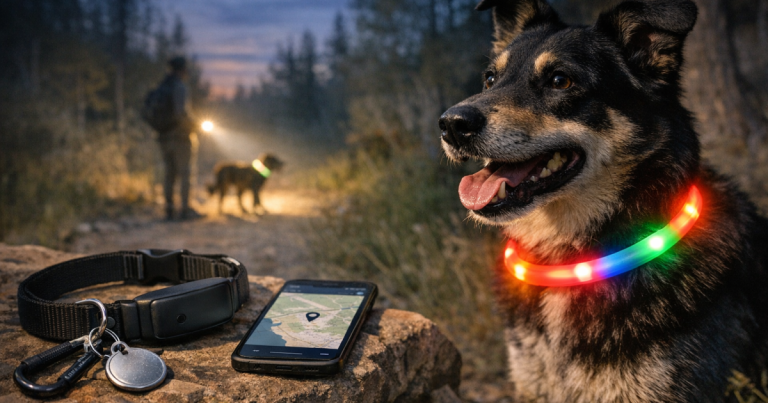
The best lost-dog plan is the one you do not need, but it still has to be ready. A GPS tracker can help you narrow a search area, but it depends on battery status, fit, coverage conditions, and whether the device remains attached. It should support your plan, not replace ID tags, training, and leash management.
Before you leave home, charge the tracker if you use one, confirm the device is attached to secure gear, and make sure someone in your group can access the tracking information. Add a physical ID tag with a current phone number, because the fastest recovery may come from a hiker, ranger, camper, or nearby resident who gets close enough to read it.
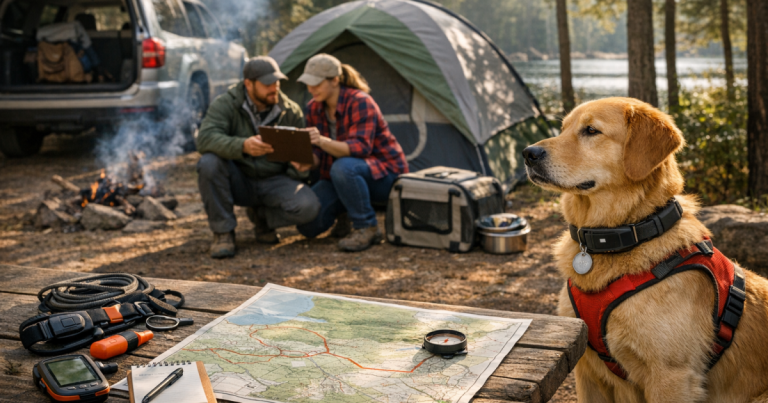
If you are staying overnight, build your plan before the dog is tired, overstimulated, and surrounded by unfamiliar smells. The same habits used for a trailhead also apply at a campsite: decide who holds the leash, where the dog rests, and what happens if the dog bolts. For a fuller routine, use this guide to build a campsite lost-dog plan before you unpack.
Step 6: Know when a chase has become a search
If your dog breaks away after wildlife, do not sprint blindly after them through rough ground. You may lose the last known point, drop gear, or push the dog farther if they circle back and see commotion. Stop, mark where you last saw the dog, and assign one person to stay near that point if you are hiking with others.
Call in a calm, familiar voice. Avoid shouting repeatedly in a panicked tone; many dogs hide or keep moving when the environment feels chaotic. Check the direction the animal traveled, but also watch the route back toward you. Some dogs chase hard for a short distance, then return to the last place they felt connected to their person.
If you have a tracker, use it to guide decisions, not to justify unsafe shortcuts. Terrain, water, cliffs, roads, and private property boundaries still matter. If the signal is delayed or unclear, work from the last reliable point and expand slowly.
Step 7: Pack for the first hour after recovery
When a dog is found after a chase, the story is not over. They may be overheated, scraped, limping, covered in burrs, or too wired to settle. Carry water, a leash backup, a small light, tick-removal tools, and basic wound-care supplies appropriate for field stabilization until a vet can evaluate anything concerning.
A compact first-aid setup is most useful when everyone in the group knows where it is and what it is for. If your trail routine needs an upgrade, start with this checklist for packing a dog first-aid kit for lost-pet searches. Keep it reachable rather than buried under camp chairs, snacks, and the mysterious extra sock every hiking bag seems to grow.
Things readers ask
Should I let my dog off leash if they have a strong recall?
Only in places where it is legal, safe, and appropriate for the conditions. A strong recall lowers risk, but wildlife movement can overwhelm training in an instant. Use a leash or long line when visibility is poor, wildlife activity is high, or the trail runs near roads, cliffs, livestock, or water.
Can a GPS tracker prevent a wildlife chase?
No. A tracker does not stop the chase from starting. It can help with location information if your dog gets away, but prevention still comes from leash control, fit, recall practice, distance from triggers, and a calm recovery plan.
What should I do if my dog keeps fixating on wildlife?
Choose easier routes for a while, hike at lower-distraction times, and practice check-ins on leash before returning to wildlife-heavy trails. Dogs with intense prey drive may need lifelong management rather than more freedom. That is not failure; it is good trail judgment.
What to remember
Wildlife chases become emergencies when several small weak points line up: too much freedom, poor gear fit, late recall, no backup ID, and no plan for the first few minutes after separation. Fix those weak points before the hike starts. Your dog can still enjoy the trail, sniff the good smells, and come home tired in the happy way, not the terrifying way.