When a dog bolts through a half-latched gate, the last thing you want is a tracker hanging crooked, buried in fur, or missing with the collar. A GPS tracker collar has one job before the technology ever matters: keep the device attached, visible to the sky when needed, and comfortable enough for everyday wear. The best choice is rarely the stiffest or widest collar. It is the collar your dog can wear securely through yard time, car rides, leash walks, and the occasional muddy sprint.
The short version
Choose a collar for a dog GPS tracker by checking five things in order: the tracker’s attachment style, the collar width it can grip securely, your dog’s neck size and coat type, the collar material’s ability to resist twisting or sagging, and whether the hardware can handle your dog’s real behavior. A secure setup should let you fit two fingers under the collar, keep the tracker from sliding under the throat, avoid rubbing behind the ears, and stay stable when the dog shakes, rolls, scratches, or pulls backward.
No collar makes a tracker foolproof. Cellular coverage, battery level, terrain, foliage, buildings, and how quickly you respond all still matter. But a well-fitted collar prevents one of the most avoidable lost-dog failures: owning a tracker that is not actually sitting where it can work when your dog disappears.
Step 1: Start with the tracker attachment, not the collar style
Before thinking about leather, nylon, buckles, or color, look at how the tracker is meant to attach. Most tracker problems begin when an owner tries to make a mount fit a collar it was not designed to hold.
- Slide-on mounts usually need a flat strap with a predictable width. If the collar is too narrow, the mount can rotate. If it is too thick, the mount may not seat properly.
- Clip-on trackers need enough collar body to prevent bouncing. A soft, thin collar may feel comfortable but allow the device to swing against the dog’s neck.
- Integrated GPS collars replace the regular collar for tracking use. Fit and comfort matter even more because you cannot simply move the device to a different strap.
- Aftermarket holders can help with compatibility, but they add another connection point that should be checked for wear.
If you use a compact add-on tracker, it helps to look closely at the attachment method before choosing the strap. For example, our FitBark GPS 2nd Gen breakdown is useful for thinking through how a small tracker sits on a dog’s existing collar rather than assuming every flat collar will behave the same way.
Step 2: Pick the collar type that matches your dog’s behavior
The best collar for tracker attachment depends less on the breed name and more on what your dog does when excited, scared, or frustrated. A calm senior dog who walks on a loose leash has different collar needs from a young shepherd mix who backs out of equipment near traffic.
Flat buckle collars for everyday tracking
A standard flat buckle collar is often the simplest base for an add-on GPS device. It gives the tracker a consistent strap surface, works for ID tags, and is easy to inspect. Look for a collar that lies flat rather than curling at the edges. If the strap folds around the tracker mount, the device can tilt or migrate around the neck.
Real-world examples of flat collar styles owners may compare include the Ruffwear Flat Out Dog Collar and the LupinePet Originals Adjustable Dog Collar. Do not assume either will fit your tracker automatically; check the tracker maker’s collar-width guidance and compare it with the collar’s actual strap width before relying on it.
Side-release collars for quick on and off
Plastic side-release buckles are convenient for daily use, but convenience is not the same as recovery reliability. For dogs who wrestle, crash through brush, or pull hard, inspect the buckle closely and replace the collar if it starts opening too easily. A side-release collar can still be a good tracking base when the buckle is solid, the strap does not loosen during wear, and the tracker mount sits away from the buckle.
Martingale collars for dogs who back out
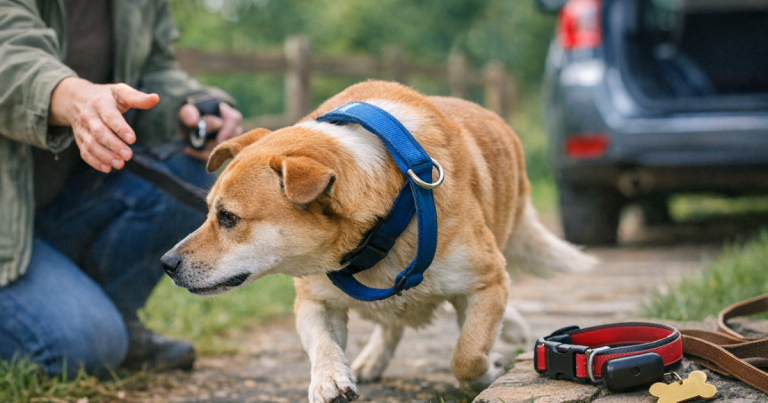
Escape-prone dogs often need more than a loose flat collar. A martingale collar can reduce the chance of a dog slipping backward out of the collar when properly fitted, but the tracker should not be mounted on the moving control loop. Put the tracker on the stable part of the collar only, and check that tightening does not pull the device into the throat or jawline.
If your dog has a history of slipping collars, review the fit principles in our guide to martingale collars for escape-prone dogs before adding a tracker. The collar’s escape-prevention function and the tracker’s position have to work together, not fight each other.
Breakaway collars for supervised or indoor use
Breakaway collars are designed to release under pressure. That design can reduce entanglement risk in some settings, but it is usually a poor primary choice for a tracker you depend on during outdoor escape recovery. If the collar releases during a fence jump or brush run, the tracker may be left behind while the dog keeps moving.
Step 3: Choose a material that stays stable when life gets messy
Collar material affects how securely a tracker rides through wet grass, dust, rolling, and leash tension. The goal is not to find the toughest-looking collar; it is to find the one that stays flat, dries reasonably, and does not stretch or twist enough to move the device out of position.
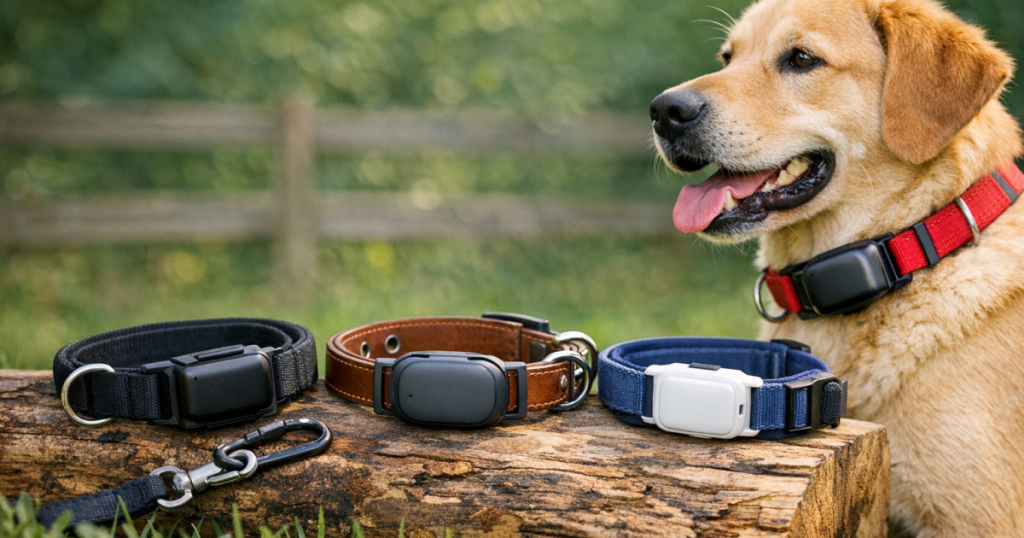
- Nylon webbing is common, light, and flexible. It can work well when the strap is firm enough to support the tracker without sagging.
- Biothane-style coated webbing is popular with owners who deal with mud and water because it wipes clean easily. Check that the coating is not so slick that the tracker mount slides.
- Leather can be comfortable and durable when well made, but thickness varies. Some mounts do not fit thick leather straps, and wet leather requires more care.
- Padded collars may help some dogs avoid rubbing, but bulky padding can interfere with tracker mounts or push the device away from the neck unevenly.
- Very elastic or decorative collars are usually weak choices for tracker attachment because they can shift, stretch, or create uneven pressure.
Hardware deserves the same attention as fabric. A collar with a strong strap but flimsy adjustment slider can still loosen during a hard play session. Metal hardware can add weight on small dogs, while large plastic parts can sit awkwardly under the jaw if the tracker is also mounted nearby.
Step 4: Get the fit right before testing the technology
A secure tracker setup starts with a collar that fits the dog, not just the device. Measure around the neck where the collar naturally sits, then use the collar maker’s size chart rather than guessing from weight or breed. Dogs with thick ruffs, loose skin, or narrow heads need extra attention because the collar can look snug while still sliding over the ears.
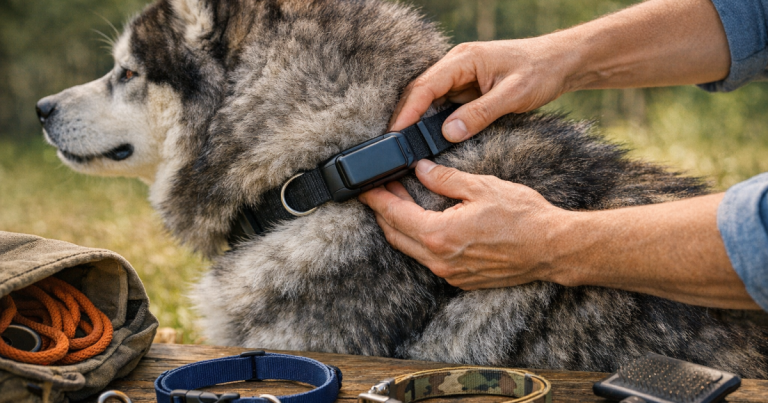
The two-finger check is a useful starting point: you should be able to slide two fingers under the collar without forcing them, but the collar should not rotate freely like a bracelet. After fitting, ask your dog to sit, lower the head, sniff the ground, shake off, and trot a few steps. Watch what the tracker does during movement.
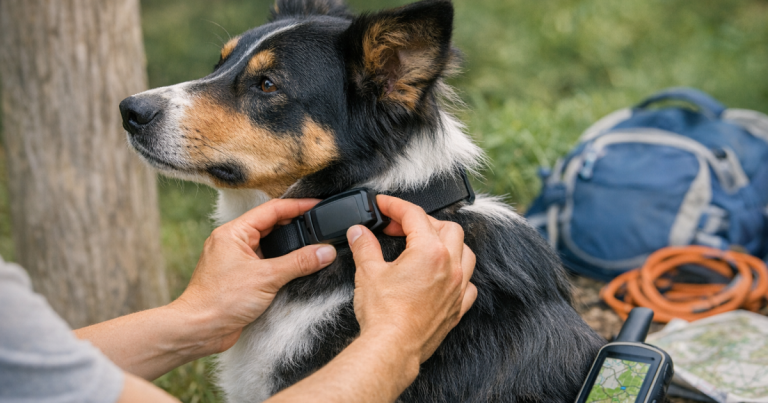
Position matters as much as tightness. A tracker that spends half the walk under the throat may have poorer access to open sky and may rub during leash pressure. Our guide on how to position a dog GPS collar for better signal explains why placement can affect real-world tracking and comfort.
Step 5: Run a five-minute attachment stress check
Do not wait for a real escape to learn whether the mount holds. After fitting the collar and tracker, do a short check in a safe, enclosed area.
- The shake test: Let your dog shake naturally after a short walk or gentle play. The tracker should not flip under the neck or slap the collar hardware.
- The scratch test: Watch what happens when your dog scratches behind the ear. If a hind paw catches the tracker repeatedly, move the device or change the collar setup.
- The roll test: Many dogs roll in grass, dirt, or carpet. Check whether the mount loosens or picks up debris that affects the closure.
- The leash-pressure test: Clip the leash to the collar only if that is how you normally walk your dog. If leash tension drags the tracker sideways, consider using a harness for leash walking and keeping the collar dedicated to ID and tracking.
- The doorway test: Dogs often explode forward at thresholds. Watch for collar shift as the dog accelerates, stops, and turns back toward you.
Repeat this check after the first few outings. New collars can settle, straps can loosen, and a tracker that looked centered indoors may ride differently once your dog is running outside.
Collar choices for common lost-dog scenarios
The right setup changes depending on the kind of scare you are trying to prevent. Think about your dog’s most likely escape pattern, then choose the collar features that reduce that specific failure.
For fence jumpers
Use a collar that cannot easily slide over the head when the dog lands, twists, or reverses direction. Avoid dangling tracker positions that could catch on fence material. Keep ID tags short and secure so they do not tangle with the tracker mount. If your dog jumps fences regularly, the collar is only one layer; yard management, supervision, and training support still matter.
For door dashers
Door dashers need a collar that stays on all day without rubbing. Comfort becomes a safety feature because a collar that is frequently removed for scratching or irritation is not useful when someone opens the front door unexpectedly. Check fit during seasonal coat changes, especially for dogs that shed heavily.
For hiking and brush
Brush, creek crossings, and rocky trails expose weak attachment points quickly. Choose a collar that resists twisting and inspect the tracker mount before leaving the trailhead. A backup engraved ID tag, such as GoTags Stainless Steel Pet ID Tags, is still worth using because a GPS device depends on power, coverage, and correct attachment.
For small dogs
Small dogs can be overwhelmed by bulky hardware. A collar that technically holds the tracker may still be uncomfortable if the device presses into the throat when the dog lies down. Prioritize low-profile hardware, careful placement, and frequent skin checks behind the ears and under the jaw.
For large, strong dogs
Large dogs can stress buckles, sliders, and stitching. A broader, stable collar can help support the tracker, but width should not restrict neck movement or push into the base of the skull. The Kurgo RSG Dog Collar is one example of a more structured dog collar style some owners may compare, but compatibility still depends on the tracker mount and your dog’s fit.
Small mistakes that make trackers easier to lose
Most attachment problems are ordinary, not dramatic. They come from habits that seem harmless until a dog is moving fast.
- Mounting the tracker next to a bulky buckle, where it tilts every time the dog turns.
- Leaving the collar loose because the dog dislikes tight gear, instead of solving the comfort issue.
- Using an old collar with stretched holes, worn stitching, or a slider that creeps open.
- Assuming a waterproof or rugged tracker is protected if the collar itself is weak.
- Charging or removing the tracker and forgetting to lock the mount fully afterward.
- Letting tags, charms, lights, and tracker hardware crowd the same small section of collar.
A cleaner setup is usually safer. Put the tracker where it rides flat, keep ID visible, remove decorative clutter, and inspect the attachment the same way you would check a leash clip before a busy road crossing.
FAQ
Can I attach a GPS tracker to any dog collar?
No. The collar must match the tracker’s mount style, strap width, and thickness requirements. A collar can look sturdy but still let the tracker rotate, bounce, or slide.
Should my dog wear the GPS tracker on a collar or harness?
For many dogs, the collar is the most practical place for constant ID and tracking. A harness can be useful for leash control, but trackers mounted on harnesses may be removed more often or shift differently during play.
How tight should a collar be when it holds a tracker?
Use the two-finger check as a starting point. The collar should be snug enough not to spin freely, but not so tight that it rubs, restricts movement, or presses the tracker into the throat.
Is a martingale collar safe for a GPS tracker?
It can be, if the tracker sits on the fixed part of the collar and the martingale is fitted correctly. Do not attach the device to the moving loop.
Do I still need an ID tag if my dog has GPS?
Yes. GPS helps you search, but an engraved ID tag helps a neighbor, hiker, or animal control officer contact you quickly if they find your dog first.
Final thoughts
The best dog collar for secure GPS tracker attachment is the one that stays comfortable, centered, and intact during your dog’s real life, not just during a tidy indoor fitting. Start with the tracker’s mount, choose a stable collar material, fit it to your dog’s neck and behavior, then test it during movement before you trust it outdoors.
A good collar will not fix weak cellular coverage, a dead battery, or an unplanned open gate. It does give your recovery plan a stronger foundation. When the equipment stays where it belongs, you can spend less time wondering whether the tracker is still attached and more time acting quickly if your dog gets loose.