A fence-jumping dog can turn a normal bathroom break into a sprint down the street. The goal is not just to prevent dogs from escaping the yard, but to remove the payoff: easy launch spots, exciting triggers, loose gates, and unsupervised rehearsal. Start with the physical fence, then layer in training, enrichment, supervision, and a recovery plan in case your dog still finds a way out.
Fence height extensions, powered containment systems, and structural gate changes should be handled by a qualified fence contractor or installer to meet local building rules, HOA requirements, and safety standards.
What to know first
To stop a dog from jumping the yard fence, you need to solve two problems at once: the dog’s access to the top of the fence and the reason the dog wants to go over it. A taller fence can help, but it will not fix a dog that is launching from patio furniture, reacting to people on the sidewalk, chasing wildlife, or being left outside long enough to rehearse the escape.
- Block the jump path: Move launch objects, add inward-angled barriers where appropriate, and close gaps near corners and gates.
- Reduce the trigger: Limit visual access to dogs, pedestrians, delivery drivers, wildlife, or traffic that sends your dog into a run-up.
- Change the routine: Supervise yard time, add structured exercise, and call your dog in before arousal builds.
- Train a safer response: Practice recall, waiting at gates, and calm check-ins away from the fence line.
- Prepare for failure: Use current ID, a tracking plan, and safe-zone alerts as backup rather than as permission to take risks.
Step 1: Watch how the escape actually happens
Before changing the yard, figure out the pattern. A dog that clears a 5-foot fence from a standing jump needs a different fix than a dog that climbs a wood privacy fence, launches from a deck bench, or uses a sloped corner as a ramp. Watch from inside the house or from a quiet spot where your dog behaves naturally. If needed, record a short video from a window so you can see the run-up, launch point, and trigger.
Look for repeatable clues. Does your dog rush one side of the yard when the neighbor’s dog comes out? Does the escape happen at dusk when rabbits move through? Is there a favorite corner where the fence meets a shed, tree, planter, trash can, grill, or stacked firewood? The more specific the pattern, the easier the fix becomes.
Step 2: Remove anything that acts like a launch pad
Many fence jumpers are not jumping the full fence height. They are using the yard like an agility course. Patio chairs, storage boxes, raised garden beds, low retaining walls, doghouses, firewood stacks, and even large planters can shorten the jump by a foot or more.
Walk the fence line and move climbable objects at least several feet away from the barrier. Pay special attention to corners because dogs can brace, bounce, or climb more easily where two fence sections meet. If a deck, slope, or permanent structure sits close to the fence, supervision and additional barriers become more important because the physical setup is already helping your dog succeed.
Step 3: Make the top of the fence harder to clear
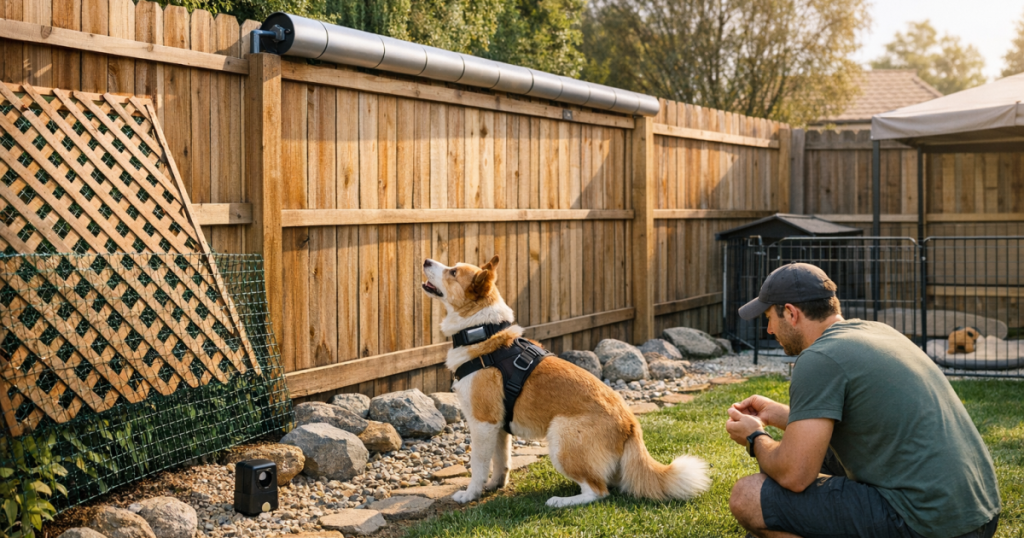
If your dog is athletic enough to reach the top rail, you may need a physical deterrent at the upper edge. The right choice depends on the fence material, local rules, appearance requirements, and your dog’s behavior. Some owners use inward-leaning fence extensions, smooth topper panels, or roller-style barriers that reduce the dog’s ability to hook paws over the top. These are not magic fixes, but they can close the gap for dogs that are barely clearing the fence.
Avoid sharp, painful, or dangerous modifications. The goal is to interrupt the escape route, not injure the dog. Barbed wire, exposed nails, unstable add-ons, or improvised spikes can create a serious injury risk and may also create problems with neighbors, landlords, or local regulations.
Step 4: Block visual triggers along the fence line
Some dogs jump because the other side of the fence is more exciting than the yard. Pedestrians, bikes, school buses, postal carriers, delivery trucks, deer, squirrels, cats, and barking dogs can all turn a calm dog into a fence-running dog. Once the dog has rehearsed that routine, the fence becomes part of the chase.
Visual blocking can help. For chain-link fencing, privacy slats or outdoor screening can reduce the constant movement your dog sees. For picket or split-rail fencing, a secondary interior barrier may be needed so your dog cannot approach the outer fence at full speed. Around gates, cover narrow sight gaps where dogs tend to fixate.
Sound can still trigger some dogs, so pair visual changes with supervision. If your dog sprints the fence every time a delivery truck arrives, bring the dog indoors during predictable delivery windows and reward calm behavior away from the fence.
Step 5: Fix gates as carefully as fence panels
Fence jumpers are often gate opportunists too. A dog that is aroused near the fence may also push through a loose latch, squeeze through a sagging gate, or bolt when someone enters. Check that every gate self-closes reliably, latches fully, and cannot be nudged open by a paw, nose, or shoulder.
For busy households, add a simple gate routine. One person handles the dog before anyone opens the gate. Kids, visitors, landscapers, and delivery helpers should not have to guess whether the dog is loose. Practicing a calm pause can also make a big difference; our guide on how to teach your dog to wait at open gates walks through that skill in a yard-safety context.
Step 6: Stop unsupervised rehearsal
A dog that jumps the fence once is more likely to try again because the escape has already paid off. The reward may be chasing a squirrel, greeting a neighbor, roaming, or simply getting attention when everyone panics. Until the yard is secure, do not leave a known jumper outside alone.
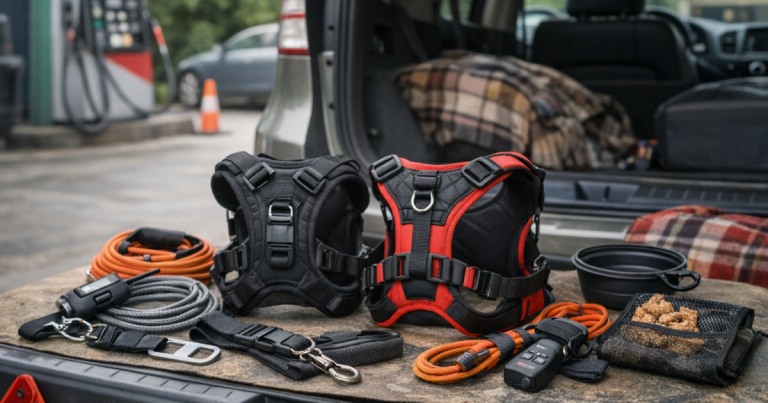
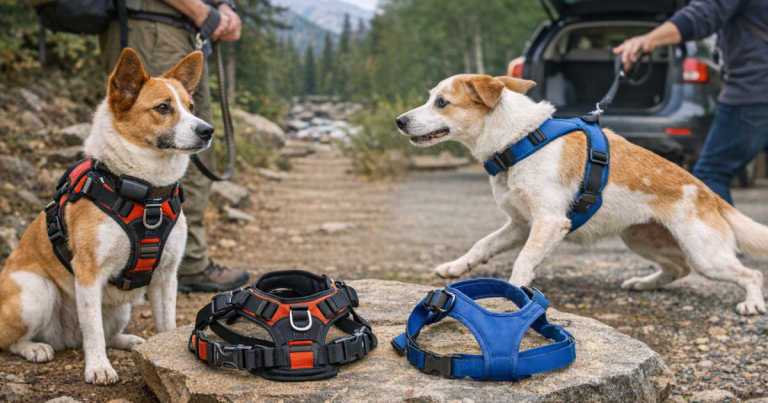
Use a long line for controlled yard time if you need a safety bridge while training. Keep the line attached to a well-fitted harness, stay present, and avoid letting the dog hit the end at full speed. If recall practice is part of your plan, a long line gives you room to reward choices without giving the dog a chance to rehearse the fence jump; for more detail, see our long-line recall practice notes.
Step 7: Give the dog a job before yard time
Fence jumping often spikes when a dog has energy, frustration, or a predictable trigger with no better outlet. That does not mean your dog is “bad” or stubborn. It usually means the yard has become the most exciting activity available.
Before letting your dog loose in the yard, try a short routine: a brisk walk, several minutes of sniffing on leash, a few recall games, or a food puzzle indoors. Then use the yard for calm exploring instead of high-arousal fence patrol. For dogs that race the perimeter, call them back early, reward a check-in, and bring them inside before they build momentum.
Step 8: Train away from the fence, then closer to it
Training at the exact fence spot where your dog loses control is usually too hard at first. Start in a quiet part of the yard with simple skills: name response, hand target, recall, sit, down, and a calm “let’s go” cue that means move away from the fence with you.
Once your dog responds reliably in easy conditions, practice at a distance from the trigger side. Reward fast turnarounds and calm disengagement. Over time, work closer to the fence while keeping the dog successful. If your dog barks, lunges, or scans intensely, you are too close or the session is too exciting. Back up, make the task easier, and end on a win.
Step 9: Use tracker alerts as backup, not containment
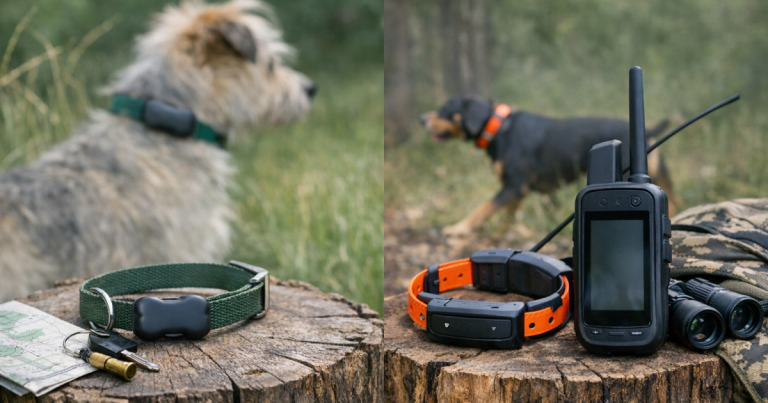
A GPS dog tracker can help with recovery planning, but it is not a fence. Cellular coverage, battery status, collar fit, app alerts, and the dog’s speed all affect how useful it is in a real escape. Treat the tracker as a second layer after the physical yard and training plan, not the main solution.
If your dog has a tracker, set the yard boundary with some margin so normal movement along the fence does not create constant false alarms. A boundary that is too tight can train you to ignore alerts; one that is too wide may delay your response. Our guide to setting reliable safe zones on a dog tracker explains how to make those alerts more useful without treating them as foolproof.
Also keep a regular collar with an ID tag on your dog when safe to do so. If a neighbor catches your dog before you reach them, a readable phone number can still be the fastest recovery tool.
Common yard setups and what to change
Chain-link fence with a sidewalk view
Dogs that see constant movement may patrol and launch. Add visual screening, interrupt fence running with an interior barrier, and supervise during high-traffic times such as school pickup, delivery windows, or evening walks.
Wood privacy fence with climb marks
Look for paw scratches or muddy streaks. Dogs may be scaling cross rails or using nearby objects. Move launch points, consider a smooth interior surface where climbing starts, and prevent access to corners during unsupervised moments.
Short fence around a small yard
If the fence is simply too low for your dog’s size and athletic ability, training alone is unlikely to be enough. Supervise closely while you plan a compliant fence upgrade or add an appropriate secondary barrier.
Rural yard with wildlife traffic
Wildlife triggers can be unpredictable. Bring your dog in at dawn and dusk if those are peak chase times, avoid leaving food outside, and check the fence line after storms, digging, or fallen branches.
FAQ
Will making the fence taller stop my dog from jumping?
It can help, but only if height is the real problem. If your dog is launching from furniture, reacting to triggers, or climbing corners, you also need to remove launch points and change the routine.
Should I leave my dog outside to get used to the yard?
Not if your dog has already jumped or tried to jump the fence. Unsupervised time can let the dog practice the exact behavior you are trying to stop.
Can training replace fence repairs?
No. Training improves choices, but a loose gate, low panel, or climbable setup still needs a physical fix. The safest plan combines yard changes with practice.
What should I do right after my dog jumps the fence?
Bring your dog inside, check for injuries, update ID if needed, and block access to the escape spot before the next yard break. Then watch for the trigger that caused the jump.
Is an invisible fence enough for a fence jumper?
It should not be treated as a complete solution. Containment systems have limitations, and they do not create a physical barrier against wildlife, people, or other dogs entering the yard.
Final thoughts
Fence jumping is stressful because it feels sudden, but most escapes have a pattern. Find the launch point, reduce the trigger, tighten the gate routine, and stop unsupervised practice while you retrain. A tracker, safe-zone alert, and readable ID can support recovery if something goes wrong, but the real win is making the yard boring, secure, and predictable enough that your dog no longer gets a chance to leave it.