The scariest escapes usually happen during normal moments: a delivery driver opens the door, a gate latch does not catch, or a nervous dog backs out of a loose harness. The right dog safety gear gives you layers of protection before, during, and after an escape. No collar, tracker, or tag can guarantee recovery, but a thoughtful setup can shorten the time between “Where did she go?” and “I found her.”
The short version
For an escape-prone dog, buy in layers rather than looking for one perfect solution. Start with secure identification, then add a comfortable restraint system, a tracker that matches your coverage area, and visibility tools for low-light searches. Test everything at home before relying on it on a hike, road trip, or busy neighborhood walk.
- Every dog needs backup ID: Use a readable ID tag and a registered microchip, even if you also use GPS.
- Fit matters more than toughness alone: A heavy-duty collar that rubs, slips, or encourages a dog to fight restraint can make escapes more likely.
- Cellular trackers suit many neighborhoods: They depend on carrier coverage and usually involve ongoing service costs.
- Radio-style tracking systems can make more sense off-grid: They are often chosen for hunting, rural acreage, and backcountry use, but they can be bulkier and more involved.
- Visibility gear helps people help you: Reflective strips, lights, and bright colors can matter when a dog bolts at dusk.
Start with the escape pattern, not the product shelf
A fence jumper, a door dasher, a leash slipper, and a panic runner do not need identical setups. Before buying anything, write down the three most likely escape scenes for your dog. Is it the front door during deliveries? A backyard gate? A campground tie-out? A loose collar during a sudden noise?
That short list tells you which layers deserve priority. A dog who squeezes out of collars may need a better-fitted harness and a martingale-style walking collar. A dog who climbs fencing needs yard management, visible ID, and tracking that works beyond your block. A dog who bolts in rural woods needs a tracker chosen around terrain and coverage, not just app convenience.
It is also worth separating recovery gear from prevention gear. A secure harness may prevent some escapes. A GPS tracker may help once an escape has already happened. A tag helps a neighbor call you quickly. The safest setup usually combines all three.
Identification: the layer that still works when batteries do not
Start with the boring layer because it is the one strangers understand instantly. A clear ID tag should include at least one current phone number. Many owners add a second number or a short phrase such as “Needs meds” or “Do not chase” when it fits the dog’s situation. Keep the text readable rather than cramming in too much information.
A microchip is not a replacement for a visible tag, but it is an important backup if a collar comes off. Make sure the chip registration is current after a move, phone change, adoption, or transfer of ownership. The tag helps on the sidewalk; the chip helps at a shelter, veterinary clinic, or animal control facility.
For dogs who crash through brush or play hard, choose tag hardware carefully. Split rings, tag silencers, and collar-integrated ID plates can reduce the chance of losing the tag. Check the attachment point weekly if your dog is rough on gear.
Collars and harnesses for dogs who slip, back out, or bolt
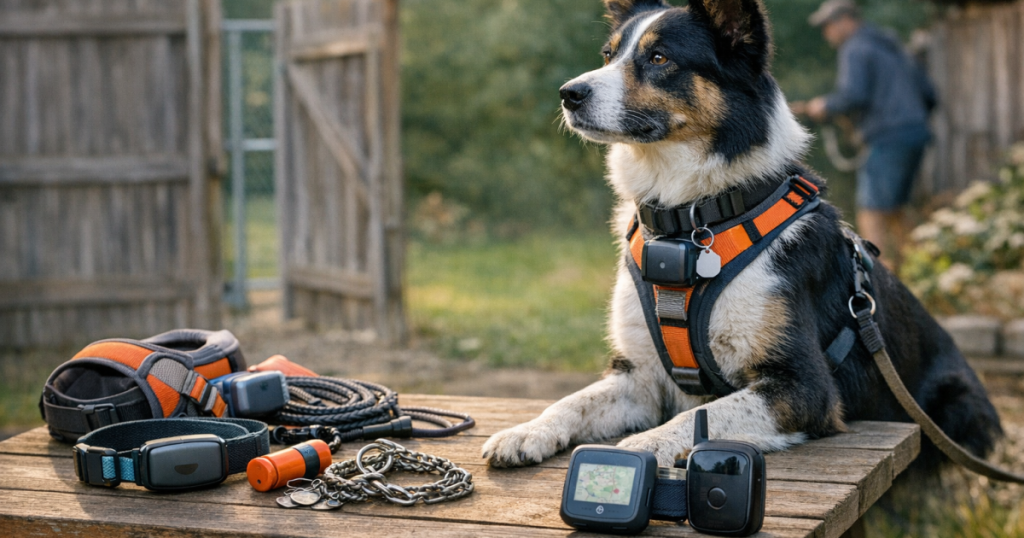
The best restraint setup is the one your dog cannot casually escape and can comfortably wear during real life. A collar should sit snugly enough that it cannot slide over the head, but not so tight that it causes discomfort. For many leash-slipping dogs, a properly fitted martingale collar can reduce backing-out risk during walks. It should be adjusted correctly and used as walking equipment, not as a loose everyday collar left to tighten unsupervised.
Harness choice depends on body shape and behavior. Deep-chested breeds, narrow-headed dogs, and anxious dogs who reverse out of gear may need more secure designs than a simple step-in harness. Look for adjustable points, a stable chest fit, and hardware that does not twist under pressure. A front and back leash attachment can be useful for control, but verify how the harness fits your dog rather than assuming more clips means more security.
For daytime walks, a lightweight reflective harness such as the Ruffwear Hi & Light Harness is one example to compare if your priority is visibility and comfortable movement. For a determined escape artist, though, do not buy on brand recognition alone. Measure your dog, check the return policy, and do several short test walks before trusting any new harness near traffic or wildlife.
Trackers: match the technology to where your dog actually runs
GPS tracking can be a huge comfort, but it is not magic. A tracker still depends on power, attachment security, network conditions, and whether you can interpret the location quickly under stress. The right choice for a city dog is not always the right choice for a ranch dog, trail dog, or hunting dog.
Cellular GPS trackers are common for suburban and urban routines because they can show location through a phone app when coverage is available. They are often a sensible fit for dogs who slip out of yards, wander neighborhoods, or travel with you to places that have reliable service. Before buying, verify service requirements, coverage expectations where you live, attachment style, size, and the manufacturer’s current battery guidance.
If you are comparing a mainstream cellular option, the Whistle GO Explore tracker profile is a useful starting point for checking the kinds of details that matter: coverage dependency, attachment approach, pet size fit, activity features, and ongoing service considerations.
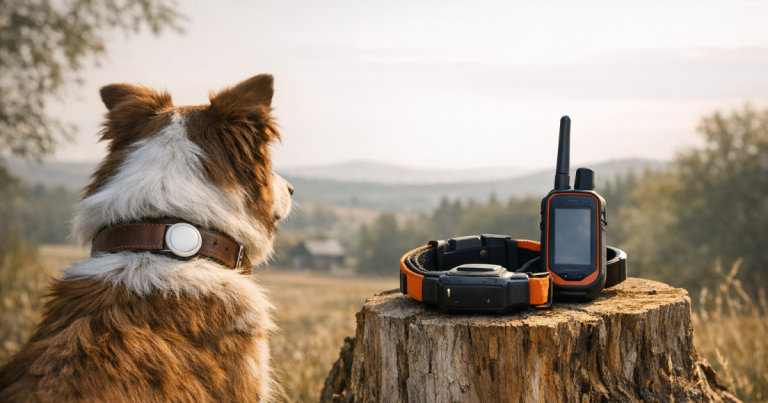
For rural properties, weak service areas, hunting land, or long hikes, look beyond app convenience. Radio-based and dedicated handheld systems may be more appropriate in places where a phone-based tracker struggles. They can also involve larger hardware, different setup habits, and a learning curve. If your dog regularly runs where bars disappear, read how to choose a dog tracker when cell service is weak before committing to a device.
Some owners compare more rugged field systems such as the Garmin Alpha 100 and TT 15X Bundle when their use case involves working dogs, open acreage, or terrain where normal cellular assumptions may not hold. That does not make it the right answer for every pet owner; it means the buying decision should start with environment, dog size, and handling routine.
Visibility gear turns a search into something neighbors can help with
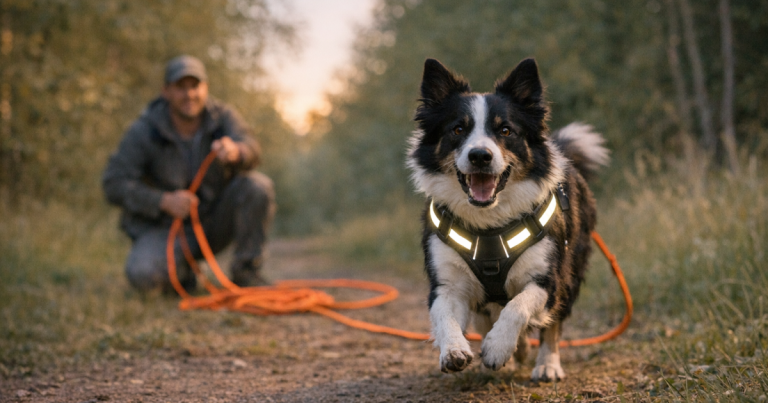
An escaped dog at night is harder to spot, harder for drivers to see, and harder for helpers to describe accurately. Reflective collars, light-up accessories, and bright harnesses are simple layers that support both prevention and recovery.
A rechargeable light accessory such as the Nite Ize NiteHowl Rechargeable LED Safety Necklace can make a dog easier to see during dusk walks or campsite potty breaks. Check fit, charging habits, water exposure guidance, and whether your dog tolerates the feel around the neck. For heavy-coated dogs, make sure the light is actually visible through fur.
Do not rely on lighting instead of restraint. A glowing collar helps you see the dog; it does not keep the dog from crossing a road, chasing deer, or disappearing behind a fence line. Pair visibility with a secure leash setup and current ID.
Leashes, long lines, and car barriers for high-risk moments
Many escapes happen during transitions. The car door opens. The leash clips on. Guests arrive. A dog sees a squirrel before you have a firm grip. Buying for those moments is just as important as buying for the walk itself.
A standard leash should have reliable hardware and a comfortable handle you can hold under sudden pressure. For training recall in open areas, a long line gives your dog controlled freedom without the risk of true off-leash roaming. The Ruffwear Rogue Long Line is one recognizable option to compare if you are building a recall practice setup, but any long line requires attention to tangling, burns, footing, and nearby hazards.
For car travel, think about the first ten seconds after arrival. Use a crate, barrier, tether, or closed-door routine that prevents your dog from launching into a gas station, trailhead, hotel parking lot, or unfamiliar driveway. Practice clipping the leash on before the door opens. For dogs with a history of bolting, the safest travel routine is slow, repetitive, and boring.
Build the right dog safety gear stack for your scenario
For a front-door dasher
- Use a visible ID tag and current microchip registration.
- Add a baby gate, exercise pen, or interior barrier near the entry.
- Keep a leash by the door for controlled greetings and deliveries.
- Consider a cellular GPS tracker if your neighborhood has reliable coverage.
- Train a station behavior away from the door, but do not depend on training alone during high-excitement moments.
For a fence jumper or digger
- Inspect gates, latches, gaps, and climbable objects near the fence line.
- Use bright, readable ID and a secure collar or harness when supervised outside.
- Choose tracking based on where the dog tends to go after leaving the yard.
- Add visibility gear for evening potty breaks.
- Supervise until the physical escape route is fixed, not just identified.
For a trail or campground escape risk
- Use a secure harness with a leash backup or long line where allowed.
- Bring a tracker suited to the area’s coverage conditions.
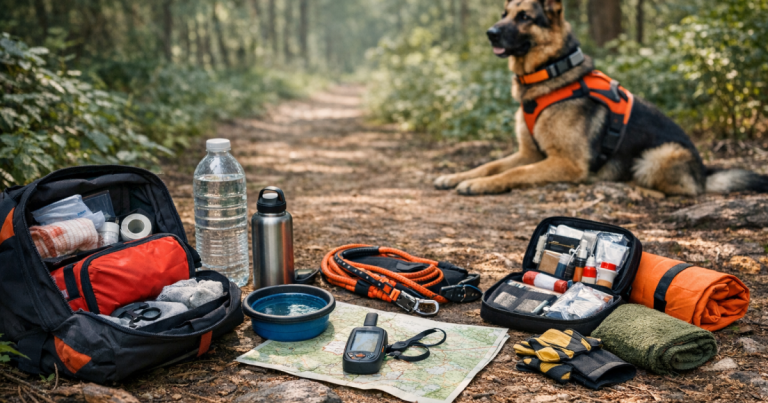
- Pack a recent photo, vaccination details, and a slip lead in the car.
- Use reflective or light-up gear after dusk.
- Carry a small canine first-aid kit such as the Adventure Medical Kits Adventure Dog Medical Kit – Trail Dog for minor trail incidents while you arrange appropriate care for anything serious.
What to test in the first 48 hours
New equipment should prove itself before a scary day. Spend two days testing the full setup in calm conditions. Put the collar and harness on at home and watch for rubbing, twisting, pawing, or freezing. Walk your normal route and check whether the leash attachment stays stable when your dog turns, pulls, or backs up.
If you buy a tracker, test alerts, location refresh behavior, charging routines, and attachment security before you need it. Walk a known loop and see how the location information looks in your actual neighborhood. If you travel often, test at a friend’s house, a park, or another regular destination. The goal is not to prove perfection; it is to learn what the device can and cannot tell you under ordinary conditions.
Also rehearse the human side of recovery. Decide who searches the block, who stays by the phone, who posts in local groups, and who checks shelters if your dog gets loose. Gear helps most when people already know their roles.
Common buying mistakes that make escapes harder
- Buying the smallest tracker without checking attachment strength: A compact device is helpful only if it stays on your dog.
- Choosing a collar by neck size alone: Head shape, coat type, and escape behavior all affect slip risk.
- Skipping subscription and coverage checks: A tracker that depends on a network needs that network to work where your dog runs.
- Letting ID information go stale: An old phone number can turn a simple neighbor call into a shelter search.
- Assuming training replaces management: Recall and door manners matter, but barriers, leashes, and ID protect your dog when excitement overrides practice.
Common questions
Is a GPS tracker enough for an escape-prone dog?
No. A tracker can help you locate a dog, but it should sit behind visible ID, a microchip, secure restraint gear, and an escape-prevention routine. Batteries, coverage, and attachment points can all fail.
Should my dog wear a collar, harness, or both?
Many escape-prone dogs benefit from both: a collar for ID and a harness for walking control. The exact setup depends on your dog’s body shape, behavior, and whether they slip backward, pull forward, or panic.
Are Bluetooth tags good for lost-dog recovery?
Bluetooth tags can be useful as backups around homes, neighborhoods, or crowds, but they are not the same as GPS trackers. They typically depend on nearby compatible devices or short-range detection.
How often should I check my dog’s safety setup?
Check fit and hardware weekly for active escape-prone dogs. Recheck tags, tracker attachment, charging habits, and microchip contact details after travel, grooming, weight changes, or gear swaps.
Why it matters
Escape-prone dogs are not “bad” dogs. They are curious, startled, driven, under-managed, under-secured, or simply faster than the people who love them. A good buying plan respects that reality. Choose gear that fits your dog’s actual escape pattern, test it before trusting it, and keep low-tech backups in place. The goal is not to buy the most complicated setup. It is to create enough overlapping layers that one mistake does not become a long, frightening search.