A missing dog scare usually starts with one tiny failure: a gate latch that did not catch, a leash clipped to the wrong ring, or a squirrel appearing at exactly the wrong moment. A good GPS dog tracker buying guide should help you plan for that messy reality, not just compare shiny gadgets. The right tracker is the one that fits your dog’s escape style, your local coverage, your daily charging habits, and your backup recovery plan.
No tracker makes a dog impossible to lose. What it can do is shorten the time between “Where did she go?” and “I know which direction to move first.” That difference matters most when panic is rising and every minute feels too long.
Main points
- Choose the tracking method around your dog’s real risks: door dashing, fence jumping, hiking, rural roaming, or travel.
- Check coverage before you trust a cellular tracker in your neighborhood, vacation area, or favorite trailhead.
- Battery life claims are only useful if they match how often you remember to charge and how long your dog may be out of sight.
- Small dogs need special attention to weight, collar width, rubbing, and where the tracker sits on the neck.
- Pair any tracker with visible ID, a current microchip record, and a practiced lost-dog response plan.
Start with the escape scenario, not the product shelf
The best choice changes depending on how your dog actually gets loose. A suburban door-dasher who bolts toward familiar sidewalks needs fast location updates near home. A hiker who disappears over a ridge needs a plan for weak cellular service. A farm dog or hunting companion may need a more specialized system than a typical consumer collar.
For a fence-jumper, prioritize alert settings, attachment security, and whether the device stays comfortable during hard play. For a nervous rescue dog, quiet fit and no-fuss daily wear may matter more than extra activity charts. For a dog staying with a sitter, choose something simple enough that another person can check battery, confirm fit, and understand alerts without a long tutorial.
This is where many owners overbuy or underbuy. A tracker that looks impressive online may be a poor fit if it depends on a network that is weak in your area. A simple device may be enough for a city dog who rarely leaves a small radius, but not enough for a rural dog who can cross fields before anyone notices the gate is open.
Understand the three main tracking choices
Cellular GPS trackers
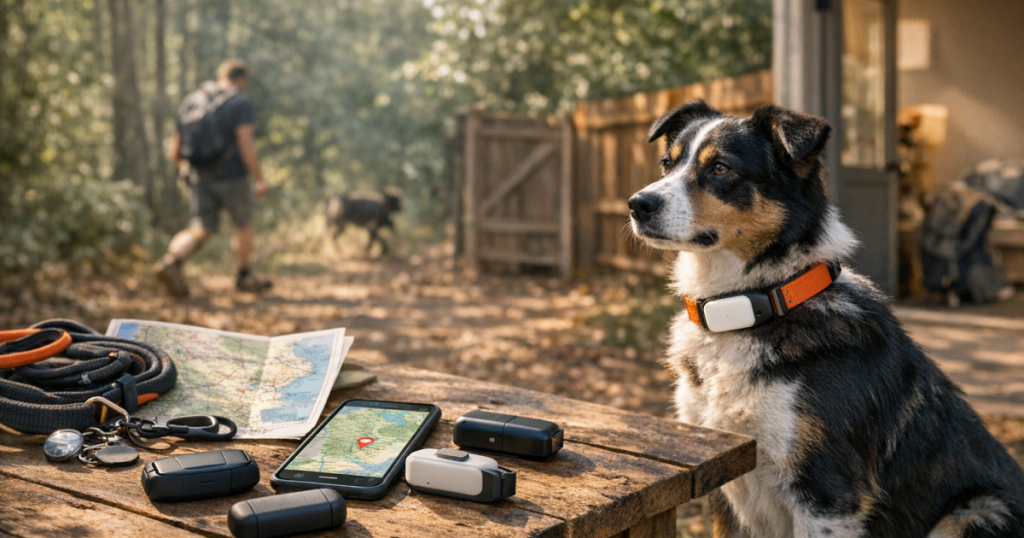
Most everyday GPS dog trackers use GPS for location and a cellular network to send that location to your phone. They are often a strong fit for neighborhoods, parks, road trips, and dogs who escape in areas with reliable service. Before buying, verify the network coverage where your dog actually goes: your backyard, local walking route, boarding location, campsite, and relatives’ homes.
Also review the subscription terms, update settings, water-resistance details, attachment style, and replacement policy. Do not rely only on marketing claims about battery life. Your real result can change with signal strength, update frequency, temperature, and how much the device is used in active tracking mode.
Dedicated handheld tracking systems
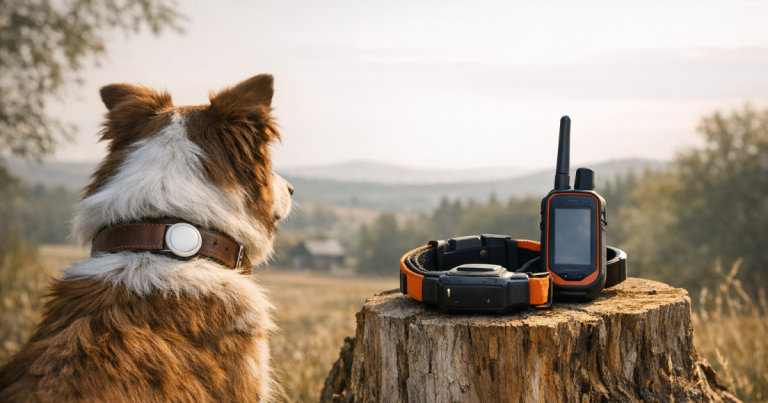
Some handlers prefer a handheld system for hunting, field work, or rural land where phones and cellular coverage are unreliable. A unit such as the Garmin Alpha 100 is an example of the type of dedicated setup dog owners often research for field tracking rather than casual neighborhood walks. With these systems, confirm the compatible collar device, intended use, range conditions, maps, training features, and local rules before you buy.
This category can be powerful, but it is not automatically the easiest or most practical for a family pet. There may be more gear to carry, more setup to understand, and a steeper learning curve. If your dog’s main risk is slipping out the front door, a dedicated field system may be more than you need.
Bluetooth tags and close-range finders
Bluetooth tags are useful for locating keys, bags, and sometimes a collar in a nearby area, but they are not the same as GPS trackers. An Apple AirTag can be a helpful backup in some households, especially where compatible devices are common nearby, but it should not be treated as a primary lost-dog recovery tool. It does not give the same kind of live outdoor tracking plan that a GPS-based dog tracker is designed to provide.
If you use a Bluetooth tag, place it in the backup layer of your plan: useful, inexpensive compared with many full tracking systems, but limited by range, nearby device networks, and how quickly conditions change once a dog is moving.
Fit and comfort can decide whether the tracker gets used
A tracker sitting in a drawer helps no one. The device must be comfortable enough for daily wear and secure enough to survive zoomies, wrestling, brush, rain, and the occasional muddy roll. On small dogs, pay close attention to weight and bulk. A tracker that seems modest on a Labrador may swing, twist, or press awkwardly on a toy breed. On thick-coated dogs, make sure the device sits where it can stay attached and visible enough for you to inspect.
Check the collar attachment method carefully. Some trackers attach to an existing collar, while others are built into a collar or require a specific strap. Look for a setup that does not interfere with leash hardware, ID tags, or a harness. After the first few walks, check for rubbing under the chin, loosened attachments, matted fur, or a device that keeps rotating to the wrong position.
If you are comparing popular consumer options and want to see how daily use cases differ, the side-by-side Whistle GO Explore and FitBark GPS comparison is a useful next step.
Battery habits matter more than battery claims
Battery life is one of the most misunderstood parts of buying a tracker. A long claim sounds reassuring, but your routine determines whether the device is ready when the gate pops open. Ask yourself when you will charge it, who will notice a low-battery warning, and whether the tracker will still be on your dog during rushed mornings, late-night potty breaks, and sitter handoffs.
For most homes, the best system is not the one with the biggest number on the box. It is the one you can keep charged without resentment. If you already charge your phone, watch, earbuds, and a bark collar, adding another device may require a visible charging station near the leash hook. If your dog travels between two homes, buy enough charging cables or docks so the tracker is not stranded in the wrong place.
- Test the tracker for 48 hours before trusting it during travel or off-leash activity.
- Walk your normal route and note where updates slow down or become less precise.
- Practice switching into lost-dog or live-tracking mode before an emergency.
- Confirm alerts with every family member who might be responsible for the dog.
- Recheck fit after grooming, weight changes, collar swaps, or seasonal coat changes.
Build a recovery plan around the tracker
A tracker gives you direction; it does not replace calm recovery steps. Keep a clear photo of your dog on your phone, update microchip contact details, and make sure the collar has readable ID. A simple engraved tag such as GoTags Stainless Steel Pet ID Tags can still be the fastest route home when a neighbor or driver finds your dog before you do.
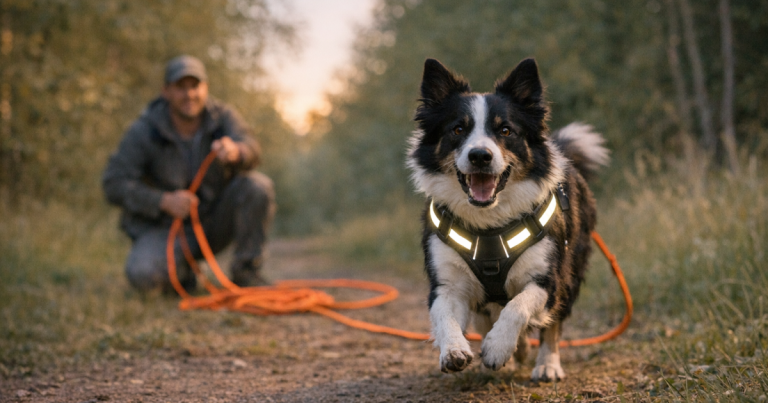
Visibility also matters. A dog spotted at dusk is easier to recover than a dog heard but not seen. Reflective collars, lights, and bright harnesses are not substitutes for GPS, but they help people notice your dog sooner. For night walks and low-light yard breaks, the NiteHowl Rechargeable LED Safety Necklace review explains where a visibility add-on fits into a broader safety setup.
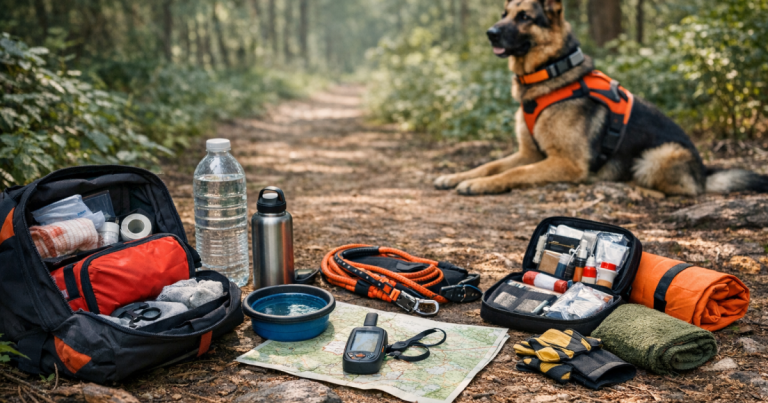
Training gear can support prevention, too. A long line such as the Ruffwear Rogue Long Line can help owners practice recall in open areas while maintaining a physical backup. That kind of practice is not glamorous, but it reduces the number of moments when technology has to save the day.
What to verify before you buy
Before you commit, slow down and check the details that affect real recovery. Product pages can make every tracker sound ready for every dog, but your situation is specific. A confident purchase comes from matching the device to your dog’s size, behavior, environment, and the people who will use it.
- Coverage dependency: Does the tracker rely on a cellular network, a nearby phone network, a handheld receiver, or a combination?
- Subscription structure: Is a plan required, and what happens if it lapses?
- Update behavior: How often does location refresh in normal mode versus active recovery mode?
- Battery routine: How often will you realistically charge it, and who gets low-battery alerts?
- Dog size and comfort: Is the device appropriate for your dog’s neck size, coat, collar width, and activity level?
- Attachment security: Can it stay on during digging, swimming, wrestling, brush, and fence squeezing?
- Water and weather handling: What does the maker actually claim, and does that match your dog’s habits?
- Travel use: Will it work where you camp, visit family, board your dog, or stop during road trips?
When a site earns money from recommendations, transparency matters. You can read this site’s affiliate disclosure to understand how editorial content and affiliate links are handled.
Helpful questions
Is a GPS tracker enough for an escape-prone dog?
No. Treat it as one layer. Use secure gates, leash habits, recall practice, visible ID, a current microchip record, and a plan for who searches which direction.
Should I choose cellular GPS or a Bluetooth tag?
Choose cellular GPS for active location tracking over distance where coverage is available. Use Bluetooth tags as a backup for close-range finding, not as your primary recovery tool.
How soon should I test a new dog tracker?
Test it during the first 48 hours. Check fit, alerts, coverage gaps, charging routine, and whether every caregiver understands the app or handheld device.
What matters most for small dogs?
Weight, bulk, collar width, and rubbing risk matter most. The tracker should stay secure without swinging, pressing into the throat, or overwhelming the collar.
Do rural dogs need a different tracking setup?
Often, yes. Rural properties and hunting areas may have weak cellular coverage, so verify network dependence and consider whether a dedicated tracking system is more appropriate.
Key takeaways
The safest purchase is not the fanciest tracker; it is the tracker that fits your dog’s most likely escape. A city door-dasher, a wooded-trail explorer, and a fence-jumping farm dog all create different recovery problems. Match the device to those problems first, then compare comfort, coverage, battery habits, and cost.
Finally, remember that technology works best when the human plan is already in place. Charge the device, keep ID current, rehearse what to do when an alert fires, and make sure every person who handles your dog knows the routine. That calm preparation is what turns a frightening escape into a faster, more organized recovery.