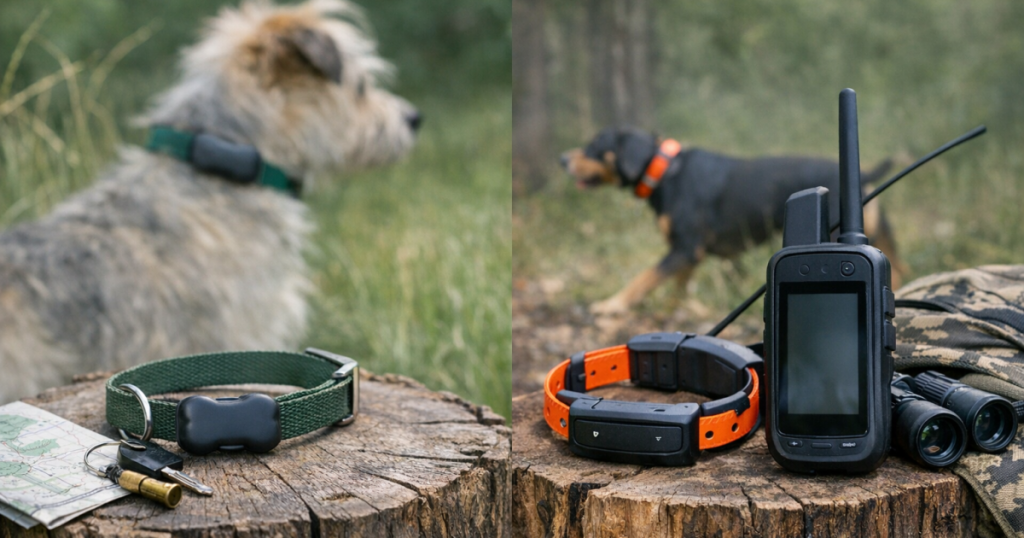
A neighborhood escape and a field-dog search ask very different things from a tracker. FitBark GPS 2nd Gen vs Garmin Alpha 200i is not a simple tag-versus-tag choice: FitBark is a pet-worn cellular GPS tracker, while Garmin’s Alpha 200i is a handheld field tracking unit that needs compatible Garmin dog collar hardware for dog location data.
Quick Buying Links
FitBark GPS 2nd Gen
everyday pet-worn tracking, escape alerts, and owners who accept the required FitBark subscription
Garmin Alpha 200i
Better for field handlers building a compatible Garmin collar setup with handheld map and compass tracking
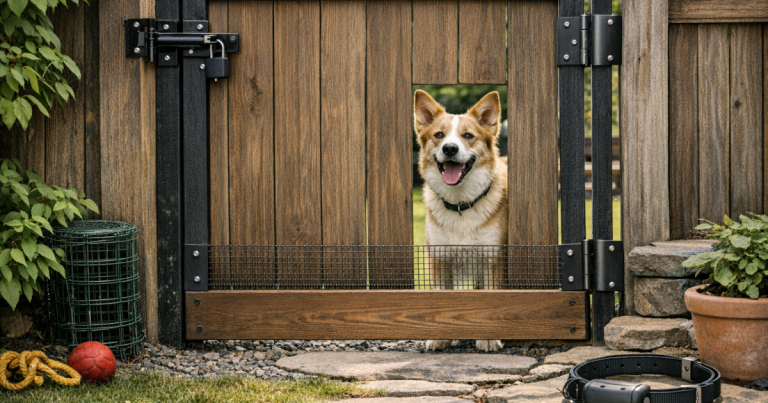
The calmer way to choose is to start with the scene you are trying to prevent. Is your dog slipping through a backyard gate, backing out near the car, or bolting during a walk? Or are you managing one or more dogs across woods, rural land, or hunting cover where a handheld map and compass view belong in the plan? Those jobs overlap, but they are not the same job.
The short version
- Choose FitBark GPS 2nd Gen if you want a small tracker that attaches to a dog’s existing flat collar, supports safe-place escape alerts, and is aimed at ordinary pet location tracking through cellular, Wi-Fi, Bluetooth, and GPS conditions.
- Choose Garmin Alpha 200i if you are building a field tracking setup around Garmin-compatible dog collars/devices and want handheld map or compass tracking for one or multiple dogs.
- The biggest difference: FitBark is the tracker your pet wears. Garmin Alpha 200i Handheld Only is not worn by the dog and does not include collars in that SKU.
- The subscription difference: FitBark requires an active in-app GPS subscription for use. Garmin’s inReach SOS, messaging, and weather functions require an active satellite subscription, while dog tracking depends on compatible Garmin dog hardware.
- The battery difference: FitBark lists different battery examples by mode, including up to 4 weeks for Wi-Fi and cellular daily-walk use, up to 10 days in lost-pet cellular mode, and up to 6 hours in live tracking. Garmin lists up to 20 hours, or up to 15 hours with inReach technology enabled.
Side-by-side snapshot
- FitBark GPS 2nd Gen: a collar-attachment pet location and health tracker for dogs and cats. Manufacturer information describes real-time pet location tracking, safe-place alerts, and use with the FitBark mobile app.
- Garmin Alpha 200i Handheld Only: a handheld GPS dog tracking device. Garmin states it tracks a dog or multiple dogs using a tracking compass or map when paired with compatible Garmin dog collars/devices.
- Pet-worn weight: FitBark’s device weighs 0.56 oz. Garmin’s listed 9.9 oz weight is for the handheld with standard antenna and battery, so it sits in your hand or pack rather than on the dog.
- FitBark collar fit: FitBark lists fit for pets from 5 lb and flat collars not wider than 1.5 in.
- Garmin tracking capacity: Garmin lists monitoring up to 20 dogs with compatible collars from up to 9 miles with a 2.5-second update rate.
- Water rating: FitBark is rated IP67 and can be submerged up to 1 meter for up to 30 minutes. Garmin Alpha 200i is rated IPX7.
Where FitBark makes more sense
FitBark is the more direct match for everyday lost-pet prevention. Its role is simple: the tracker goes on the pet’s collar, the FitBark app is part of the setup, and the product is positioned around pet location tracking rather than field handling. For a dog who slips out the front door, squeezes under a fence, or wanders from a sitter’s yard, that kind of always-worn format is the main advantage.
Manufacturer-stated location methods for FitBark include on-board GPS, mobile phone GPS, Wi-Fi APIs, cell-tower data, 4G LTE-M, Wi-Fi, and Bluetooth connectivity. The official information also describes nationwide coverage through an embedded LTE Cat M1 cellular SIM, with support for Verizon, AT&T, and T-Mobile LTE-M networks. Editorially, that makes FitBark easier to understand as a consumer pet tracker: it is built around normal pet-owner routines, not a hunting handheld workflow.
The trade-off is dependency. FitBark requires an active subscription before use, and official support says activation may take up to 24 hours. It also relies on cellular, Wi-Fi, Bluetooth, and GPS conditions. That does not make it weak; it means it belongs in a layered recovery plan rather than being treated like a magic button. If you are testing a new safe place before leaving town, the same habits in testing escape alerts before a dog sitter takes over apply here: confirm the routine while everyone is calm, not after the gate is already swinging open.
Where Garmin Alpha 200i makes more sense
Garmin Alpha 200i is a different animal. The handheld-only unit is not a collar attachment and does not include collars. Garmin’s product information says it must be paired with compatible Garmin dog collars/devices for dog tracking. That single distinction is the hinge of the whole comparison.
For field work, the Alpha 200i’s strengths are clearer. Garmin lists tracking a dog or multiple dogs by map or compass, multi-GNSS support with GPS and Galileo, a 3.5 in sunlight-readable capacitive touchscreen, preloaded TopoActive maps, and BirdsEye Satellite Imagery direct to device. Garmin also states the system can monitor up to 20 dogs with compatible collars from up to 9 miles with a 2.5-second update rate.
That is overbuilt for many backyard escape problems and exactly the point for some rural handlers. If your concern is a dog ranging in cover, working across land, or being managed as part of a multi-dog field setup, a handheld map-and-compass system is a more appropriate tool than a small consumer pet tag. If your dog’s scariest moments happen when wildlife appears on a trail, pair any tracking setup with prevention habits from keeping wildlife chases from turning into lost-dog emergencies.
Tracking style: consumer pet recovery or field handling?
FitBark and Garmin both involve GPS, but the owner experience is completely different. FitBark is a pet-worn device using GPS alongside phone GPS, Wi-Fi, cell-tower data, LTE-M, Wi-Fi, and Bluetooth. Garmin Alpha 200i is a handheld with GPS and Galileo support, receiving dog tracking information through compatible Garmin dog collar/device hardware.
For a suburban dog owner, the FitBark model usually creates less friction. The tracker stays on the collar, escape alerts can be part of the daily setup, and the phone app is central to tracking use. For a field owner, Garmin’s system puts the handler in front of a dedicated screen with map and compass tools. That is not casual convenience; it is a more involved tracking workflow.
This is also where expectations should stay realistic. FitBark does not have a manufacturer-stated fixed mile range in the supplied evidence the way Garmin does for compatible-collar tracking. Garmin, in turn, is not a complete pet-worn tracker when purchased as the handheld-only SKU. Calling them both “GPS trackers” is technically fair, but it hides the real purchase decision.
Subscription and hardware commitments
FitBark’s subscription requirement is straightforward: an active FitBark GPS subscription is required to use the device, with activation purchased in the FitBark mobile app. For some owners, that monthly or plan-based commitment is acceptable because it supports the cellular pet-tracking model. For others, the idea of a tracker that will not function without activation is the first filter.
Garmin’s commitment is different. The handheld-only Alpha 200i requires compatible Garmin dog collars/devices for dog tracking. Garmin’s inReach technology capability includes interactive SOS and two-way messaging, and those inReach functions require an active satellite subscription. The important distinction is that Garmin’s satellite subscription is tied to inReach communication features, not proof that the handheld-only SKU is a complete dog-tracking collar by itself.
In plain terms: FitBark asks you to maintain a pet tracker subscription. Garmin asks you to build a compatible Garmin field tracking setup, with a satellite subscription added when you want inReach features. One is simpler to explain to a pet sitter. The other is built for a handler who expects a dedicated device in hand.
Battery expectations in real recovery scenarios
Battery claims only help when you read the mode attached to them. FitBark lists up to 4 weeks for Wi-Fi and cellular daily-walk use, up to 10 days in lost-pet cellular mode, and up to 6 hours in live tracking. That spread is useful because a quiet week at home and an active search are not the same electrical demand.
Garmin lists up to 20 hours for Alpha 200i and up to 15 hours with inReach technology enabled. That is a handheld runtime, not the battery life of a pet-worn tag. For a day in the field, the handheld format makes sense because you are already managing gear. For a dog who might slip out while a houseguest unloads groceries, a charged pet-worn tracker is easier to keep in the daily routine.
The editorial lesson is simple: do not compare the biggest number from one product to the smallest number from the other. Compare the way your dog actually gets lost. A live-tracking search, a long field day, and a normal week of neighborhood walks all drain devices differently.
Fit, comfort, and the backup layer
FitBark’s physical advantage is size. At 0.56 oz, and with listed support for pets from 5 lb, it can suit dogs that would never be candidates for bulky field hardware. FitBark also specifies flat collars up to 1.5 in wide, which gives owners a clear collar-attachment boundary.
Garmin Alpha 200i avoids pet-worn weight because the listed 9.9 oz device is handheld. That does not remove the need for dog-worn hardware in a Garmin tracking setup; it simply means the Alpha 200i unit itself is not the part your dog carries. For owners comparing comfort, that distinction matters more than the numbers alone.
Whichever route you choose, do not let electronics become your only identification layer. A tracker can lose power, sit outside ideal signal conditions, or be separated from a collar. A plain ID tag and a correctly fitted backup collar still earn their place, and the fitting steps in pairing a backup ID collar with a GPS tracker are worth handling before the first real scare.
Quick answers before deciding
Is FitBark a better ordinary lost-dog tracker?
For ordinary neighborhood lost-pet recovery, FitBark is more directly aligned with the job because it is a pet-worn collar attachment with safe-place alerts and real-time pet location tracking. Its limits are also clear: it requires an active FitBark subscription and depends on cellular, Wi-Fi, Bluetooth, and GPS conditions.
Is Garmin Alpha 200i better for hunting or field dogs?
Garmin Alpha 200i is the stronger fit for a field or hunting-style tracking setup when paired with compatible Garmin dog collars/devices. Garmin lists map or compass dog tracking, multi-dog capacity, multi-GNSS support, and inReach communication capability with an active satellite subscription for those functions.
Can the Garmin Alpha 200i handheld-only unit track my dog by itself?
No. The handheld-only SKU includes no collars and must be paired with compatible Garmin dog collars/devices for dog location tracking. That is the point most likely to cause an expensive misunderstanding.
Which one should you choose?
Choose FitBark GPS 2nd Gen if your priority is everyday escape awareness: doors left open, backyard gaps, sitter handoffs, neighborhood walks, and small-to-medium daily routines where a light pet-worn tracker is the easiest habit to maintain. Its best case is the owner who wants tracking and alerts on the dog’s normal collar and accepts the required subscription as part of that system.
Choose Garmin Alpha 200i if your tracking problem looks like field management: one or more dogs working at distance, a handler using a dedicated handheld, and a setup built around compatible Garmin dog collars/devices. Its best case is not the casual pet owner hoping for a tiny tag; it is the person who wants a map-and-compass tracking system and understands the separate hardware requirement.
The most honest verdict is that these products solve overlapping but different problems. FitBark is the cleaner pick for most household escape prevention and lost-pet recovery routines. Garmin Alpha 200i is the more capable direction for field tracking when you are ready to build the compatible collar system around it. If your dog is a door dasher, start with the tracker they will actually wear every day. If your dog is a working or hunting dog ranging across land, start with the handheld system designed for that scene.
Quick Buying Links
FitBark GPS 2nd Gen
everyday pet-worn tracking, escape alerts, and owners who accept the required FitBark subscription
Garmin Alpha 200i
Better for field handlers building a compatible Garmin collar setup with handheld map and compass tracking