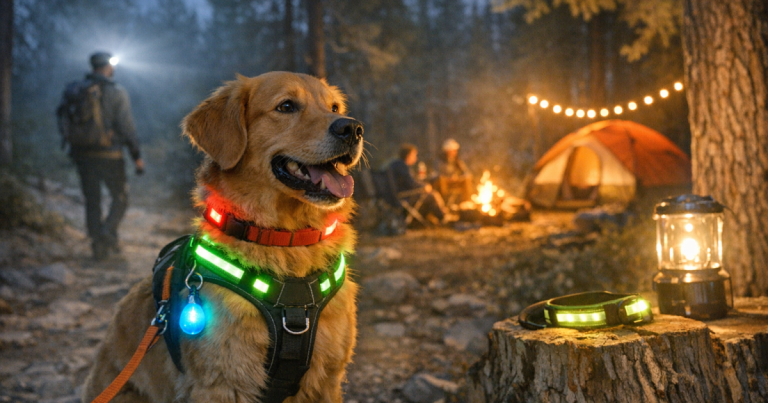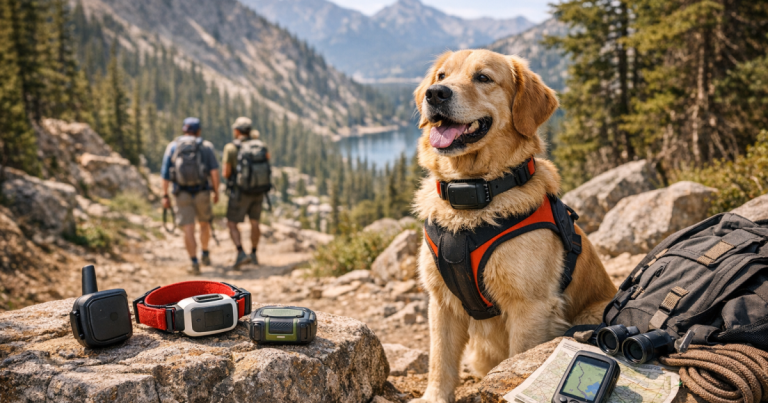
When a dog slips a harness at a trailhead or jumps out at a motel stop, the first person who finds them may not have your tracker app, your vet records, or much time. The most dependable piece of dog hiking safety gear is still a readable ID tag that tells a stranger who to call and how to help your dog stay put until you arrive.
A tracker can show you where to go, but an ID tag helps someone already beside your dog reach you fast. For travel and hiking, the goal is not the fanciest tag. It is a tag that stays attached, can be read in poor light, and carries contact details that work away from home.
Start with the job the tag has to do
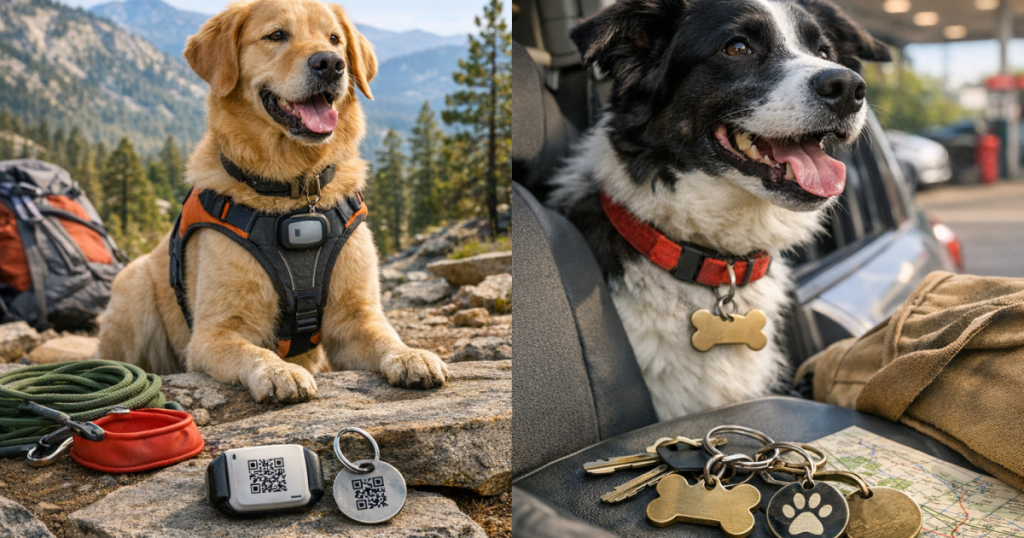
For 2026, the strongest ID setup for hiking and road trips is a durable engraved tag or collar plate with a primary mobile number, a backup contact, and one short action cue such as “call owner” or “needs medication” only if that is true. QR and NFC tags can be useful extras, but a printed or engraved phone number should still be visible without an app, account, or internet connection.
That distinction becomes important in places where dogs get lost: trail parking lots, campgrounds, highway rest areas, rental cabins, and unfamiliar backyards. A finder may be holding a wiggly dog, managing their own kids or dogs, or standing in a spot with weak service. Make the first step obvious.
If your dog is newly adopted, nervous in new places, or likely to back out of gear, ID is only one layer. Set up the whole travel kit before the first big outing; our guide to training gear for newly adopted flight-risk dogs covers the collar, harness, leash, and backup pieces that reduce those early escape scares.
Four ID tags worth considering for travel days
GoTags Stainless Steel Bone Dog Tag: simple, readable, familiar
This is the classic choice for owners who want a straightforward engraved tag that a stranger immediately understands. The bone shape leaves room for clear lines of text, and stainless steel is a sensible material for a tag that may rub against a collar, leash clip, or metal bowl at a campsite.
Use it when readability matters more than style. Keep the text uncluttered: your mobile number, a second number, and a short note such as “Reward” or “Microchipped.” Skip your dog’s name if you prefer to reserve space for contact details.
Red Dingo Stainless Steel Pet ID Tag: visible and still conventional
Some dogs wear gear that blends into their coat or harness. A brighter conventional tag can make the ID easier to spot when a finder is checking the collar quickly. Red Dingo’s pet ID tags are a good fit for owners who want a more noticeable tag without moving into QR-only identification.
Before a hiking trip, check the split ring and the engraving. Any hanging tag can catch, bend, or wear over time, so the attachment hardware deserves as much attention as the tag itself.
ROAD iD Dog ID Tag: good for a lower-profile collar setup
A flat or collar-mounted ID can be helpful for dogs who shake, jingle, or brush through tall grass and shrubs. ROAD iD’s dog tag options are worth considering when you want identification to sit close to the collar rather than swing from a ring.
This style is especially useful for road trips because it is less likely to disappear under a bandana, car harness strap, or thick neck fur. Confirm the tag style fits your dog’s collar width before you order, since flat ID setups are less forgiving than a hanging tag.
SiliDog Silent Pet Tag: quieter for cabins, hotels, and sensitive dogs
Noise is not a safety feature, but it does affect whether a dog wears a tag consistently. Silicone tags such as the SiliDog Silent Pet Tag appeal to owners who want less clatter in motel rooms, campers, or rental homes.
The trade-off is maintenance. Soft, flexible tags should be inspected for chew marks, stretching, and worn lettering before a trip. If your dog mouths tags or roughhouses with other dogs, choose a setup you can check easily every day.
What to engrave before you leave home
The best tag text is short enough to read quickly and useful enough to trigger the right action. A lost dog on a trail does not need a biography. They need a working route back to you.
- Line 1: Your main mobile number, including area code.
- Line 2: A second mobile number for another adult who will answer during the trip.
- Line 3: “Microchipped” if your dog is chipped and the registration is current.
- Line 4: One urgent note only if needed, such as “Needs meds” or “Do not chase.”
- Optional: “Reward” can motivate a call, but only use it if you are comfortable honoring it.
For road trips, update the backup contact if your usual emergency person is traveling with you. Two phones sitting in the same car are not much of a backup if both are out of service, lost, or dead.
Pair the tag with a tracker, but do not ask either one to do every job
A physical ID tag and a GPS tracker solve different parts of the same problem. The tag helps a finder contact you. The tracker helps you search when no one has your dog in hand. Neither is foolproof, and both need a pre-trip check.
For hiking dogs, test the tracker on the actual harness or collar setup you plan to use, not just on the kitchen table. Device position, strap tension, fur thickness, and rough movement can all affect whether the tracker stays secure. Use our walkthrough on how to test a dog GPS tracker on a harness before you trust the setup miles from the car.
Bluetooth tags and GPS trackers are also not interchangeable. Bluetooth recovery tags can help when nearby devices detect them, while GPS-style dog trackers are designed for broader location reporting but depend on their own network, battery, and coverage limits. If you are weighing a backup tag against a real tracker, the comparison of Garmin Alpha LTE vs Tile Pro explains the difference in plain terms.
Do a five-minute ID check before each travel day
This is the small routine that prevents the most avoidable failures. Do it before you load the car, not when your dog is already excited at the trailhead.
- Read the tag from a few feet away. If you have to squint indoors, a stranger will struggle outdoors.
- Call both numbers from another phone. Confirm voicemail is set up and not full.
- Check the attachment point. Split rings, S-hooks, rivets, and collar sleeves can wear or loosen.
- Look for fur coverage. Thick-coated dogs may hide flat tags or collar plates unless the collar sits correctly.
- Match the tag to the outing. A quiet cabin tag may not be the same tag you want for brushy trails.
- Photograph the current setup. If your dog gets loose, you can show exactly what collar, tag, and harness they are wearing.
If your route includes trailheads, ferry stops, rest areas, or pet-friendly hotels, assume there will be at least one rushed leash transfer. Clip the leash before opening doors, keep the tag on the collar even when the tracker is charging, and make sure another adult knows which number is engraved on the tag.
Choose the tag for the escape scenario, not the product photo
For a confident hiking dog with solid recall, a simple engraved stainless steel tag may be enough alongside a microchip and current photos. For a noise-sensitive dog in hotels, a quieter silicone tag may increase the odds that the tag stays on all weekend. For a dog who barrels through brush, a flat collar-mounted ID may be the cleaner choice.
For flight-risk dogs, stack the layers: engraved ID, microchip registration, recent photos, secure collar fit, harness, leash routine, and an appropriate tracker. The tag should never be treated as decoration. It is the message your dog carries when you are not close enough to speak for them.
Main lessons for 2026 trips
The best dog ID tag for hiking and road trips is the one a tired, distracted stranger can read immediately and use without special tools. Engraved contact information remains the core safety layer, while QR profiles, Bluetooth tags, and GPS trackers work best as backups rather than replacements.
Before every trip, ask three simple questions: Can someone read it? Can they reach me? Will the tag still be on my dog after a muddy trail, a motel night, and three gas stops? If the answer is yes, your ID setup is doing its job.