When a dog disappears, the first hour feels loud: doors left open, neighbors calling, cars moving too fast, and your mind jumping ahead. A lost dog recovery plan works best when it gives you something calm to do next, not when it asks you to remember everything at once. The goal for the first 72 hours is simple: protect your dog from being pushed farther away, widen the search in the right order, and make every sighting easier to verify.
Humane trapping, roadway searches, and access to restricted or private property should be coordinated by animal control, law enforcement, or an experienced rescue professional to comply with local regulations and safety requirements.
The first rule: slow the panic before it spreads
Most lost-dog searches become harder when too many people start running, shouting, or chasing. A scared dog may not act like the dog you know at home. Even friendly, food-loving dogs can bolt from their own owner when adrenaline takes over.
Before you send out alerts, choose one person to stay reachable by phone. Choose another person to check the house, yard, garage, shed, porch, and nearby hiding spots. If the dog escaped from a car, campground, trailhead, or friend’s house, mark the exact last-seen point on your phone and write down the time.
- Keep one phone fully available for calls and texts.
- Do not flood the area with people calling the dog’s name.
- Ask helpers to report sightings instead of chasing.
- Leave a familiar gate, garage, or safe entry point open only if it is safe to do so.
- Use a calm, normal voice if you see the dog nearby.
Minutes 0 to 60: protect the last-seen area
The first hour is not about covering the most miles. It is about preventing bad information and preserving the place where your dog may circle back. Many dogs stay closer than owners expect at first, especially if they slipped through a door, backed out of a collar, or were startled by a delivery, fireworks, traffic, or another animal.
Start with quiet checks of nearby yards, under decks, behind sheds, around dumpsters, in stairwells, and along fence lines. If your dog is small, injured, elderly, or noise-sensitive, think low and tight: bushes, crawl spaces, open garages, and parked cars can all become hiding places.
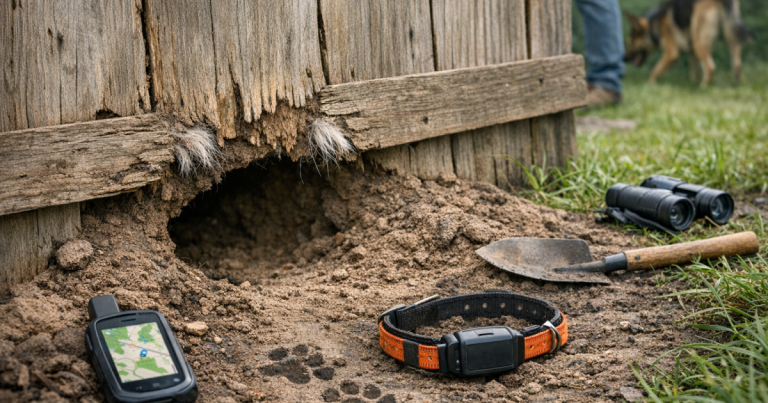
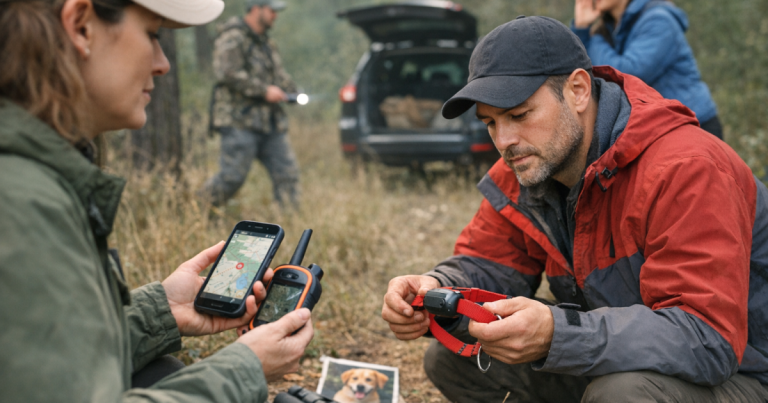
If your dog is wearing a GPS tracker, take a screenshot of the last location, battery status if shown, and the time of the latest update. A location point is a clue, not a guarantee. Cellular coverage, trees, buildings, hills, and battery level can all affect updates. For a deeper step-by-step approach, use our guide to track a lost dog using recent GPS pings before you start driving in circles.
Hours 1 to 6: build a small, accurate search zone
Once the immediate area is checked, expand with purpose. Think in layers: the escape point, the nearest safe cover, the easiest travel corridors, and the places a loose dog might be drawn to. In suburban neighborhoods, that may mean alleys, school fields, drainage paths, apartment parking lots, and yards with dogs. In rural areas, it may mean tree lines, barns, creek beds, livestock fencing, or the shoulder of a quiet road.
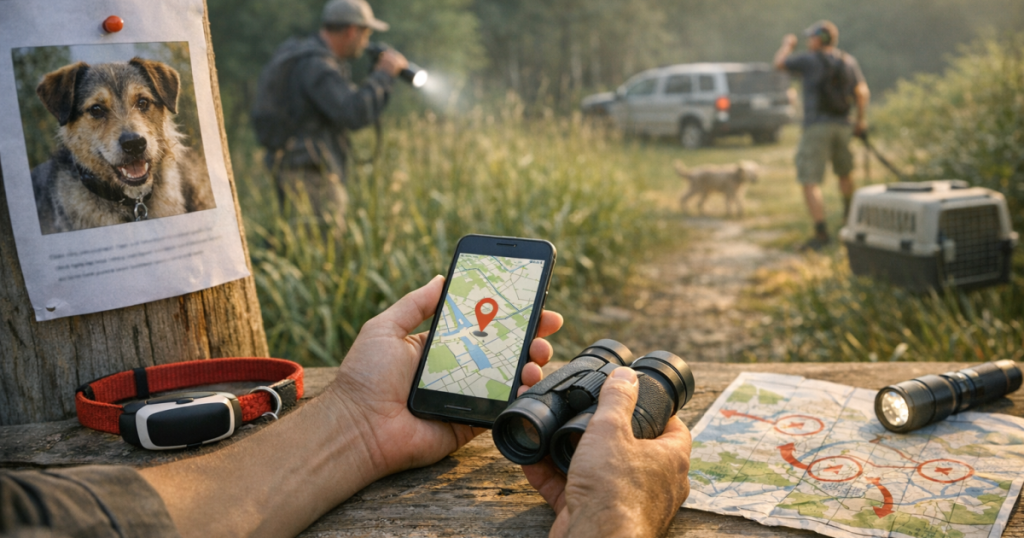
Give helpers specific jobs. One person can call nearby shelters and animal control. One can print flyers. One can monitor neighborhood groups. One can drive slowly through nearby streets without calling out or honking. If a sighting comes in, write down the time, location, direction of travel, and what the dog was doing.
- Use one clear photo that shows your dog’s face and body.
- Put “DO NOT CHASE” on flyers and social posts.
- Include your phone number, cross streets, and the date last seen.
- Avoid posting your full home address publicly.
- Ask people to text a photo or exact location if they see the dog.
Hours 6 to 24: make your alert network hard to miss
By the end of the first day, your search needs both speed and consistency. Contact local animal shelters, animal control, nearby veterinary clinics, emergency vets, and your microchip registry. If your dog is microchipped, confirm your contact information is current. If your dog has an ID tag, make sure anyone answering your phone knows what to ask: where, when, direction, and whether the dog appeared scared, injured, or approachable.
Post in local neighborhood apps, community Facebook groups, lost-pet groups, and town pages, but keep the message short. Long emotional posts may be heartfelt, but quick details help strangers act. Use the same photo and wording everywhere so people recognize the alert immediately.
Physical flyers still matter in the US, especially for mail carriers, delivery drivers, school bus stops, dog walkers, landscapers, park staff, and gas station clerks. Place flyers where people slow down naturally. Always follow local posting rules and avoid blocking road signs or creating hazards.
Hours 24 to 48: treat sightings like evidence
The second day is when many searches either become organized or become exhausting. Resist the urge to race to every possible report with a crowd. Instead, look for patterns. Are sightings clustered near a creek, a golf course, a restaurant dumpster, a trail entrance, or the road back toward home? Is the dog moving at dawn and dusk? Is the dog avoiding people but returning to the same block?
If your dog has been seen but will not come close, lower the pressure. Ask people not to call, whistle, follow, or corner the dog. A familiar car parked quietly nearby may be less threatening than a group of people on foot. Food can help hold a dog in an area, but feeding stations and humane traps should be coordinated carefully with local animal control or an experienced recovery volunteer so the setup does not lure the dog toward traffic or catch the wrong animal.
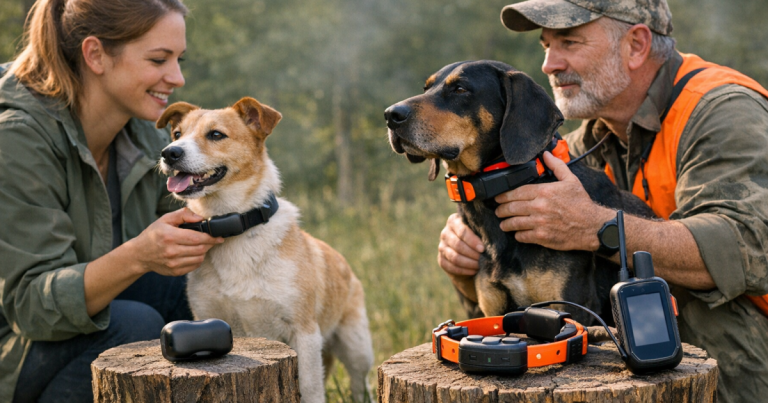
This is also the time to check your gear assumptions for the future. Bluetooth tags, engraved ID tags, and microchips are helpful backups, but they do different jobs. A Bluetooth tag depends on nearby compatible devices; a GPS tracker depends on its own coverage and power. If you use a tag as a secondary layer, make sure it is mounted securely. Our explainer on choosing a secure Bluetooth tag holder for a dog collar covers the collar-fit side of that decision.
Hours 48 to 72: widen the search without losing the pattern
After two days, expand your map, but do not abandon the last reliable information. Dogs may travel surprisingly far, yet many continue looping through familiar cover, water sources, quiet streets, or places where they found food. Keep your original last-seen point, confirmed sightings, and possible travel routes on one shared map or written log.
Call shelters again rather than assuming the first report was enough. Ask about dogs brought in under different breed labels or color descriptions. A muddy, frightened, or shaved-looking dog may not match the photo perfectly. If your dog is a mix, give broad descriptions: size, coat length, collar color, markings, and any medical needs.
Refresh flyers with “still missing” and the latest confirmed area if the search has shifted. Keep social posts updated, but avoid posting every unverified rumor as fact. Too many conflicting updates can send well-meaning helpers into the wrong neighborhoods.
If you see your dog, do less than your heart wants to do
The reunion moment is where many owners accidentally create another chase. If you spot your dog, stop moving toward them. Turn your body sideways, lower your profile, avoid direct eye contact, and speak softly only if your dog seems to recognize you. Some owners have better luck sitting on the ground, opening a familiar food container, or pretending to ignore the dog.
If the dog moves away, do not follow closely. Note the direction and quietly update your search helpers. The aim is to keep the dog in a known area long enough for a safe recovery, not to win a footrace. For dogs that repeatedly bolt doors, jump fences, or panic during travel, it is worth reviewing dog safety gear for escape-prone dogs once the immediate emergency is over.
Helpful questions
Should I offer a reward?
A reward can increase attention, but keep the wording simple and avoid creating competition. Ask people to report sightings, not capture the dog. Do not publicly describe unique proof-of-ownership details that only you would know.
What if my dog is friendly and usually comes when called?
Assume fear may change their behavior. A friendly dog can still run from familiar people after a stressful escape. Calm, quiet approaches are safer than calling loudly or rushing in.
How often should I call shelters?
Call daily during the first 72 hours, and visit in person when possible. Descriptions can be entered incorrectly, and a dog’s appearance may change after time outdoors.
Can a GPS tracker guarantee I will find my dog?
No tracker is foolproof. GPS tools can provide valuable clues, but coverage, battery level, attachment security, terrain, and update timing all affect how useful the information is.
When should I stop searching the original area?
Do not stop too soon. Expand outward while still monitoring the last confirmed sighting area, because many dogs loop back to familiar routes, food sources, or quiet cover.
The big picture
A lost dog recovery plan is strongest when it keeps people calm, turns sightings into usable information, and avoids pushing a frightened dog farther away. In the first 72 hours, focus on the last-seen area, clear public alerts, shelter contact, careful GPS interpretation, and safe recovery behavior. The work is emotional, but the steps are steady: confirm, record, update, and move with purpose.