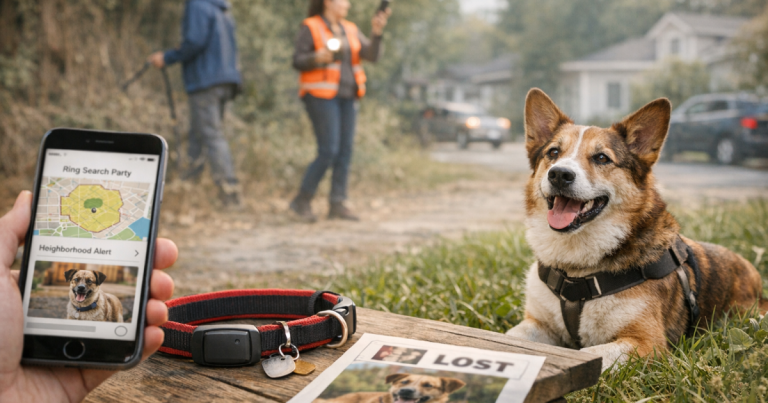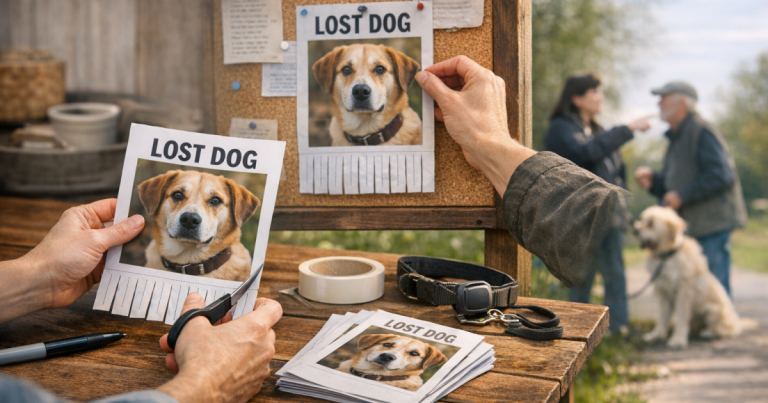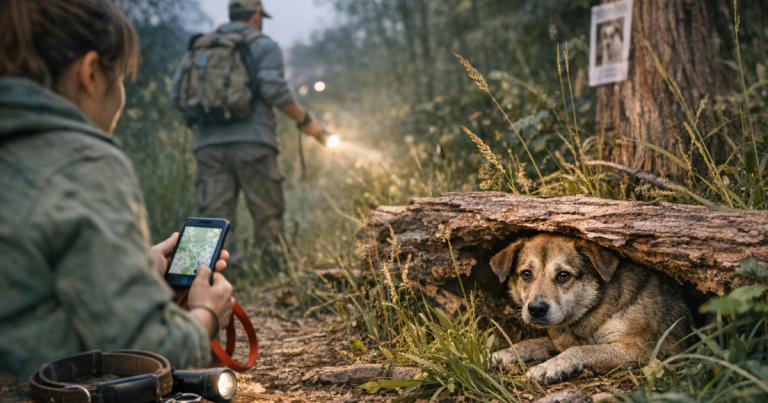
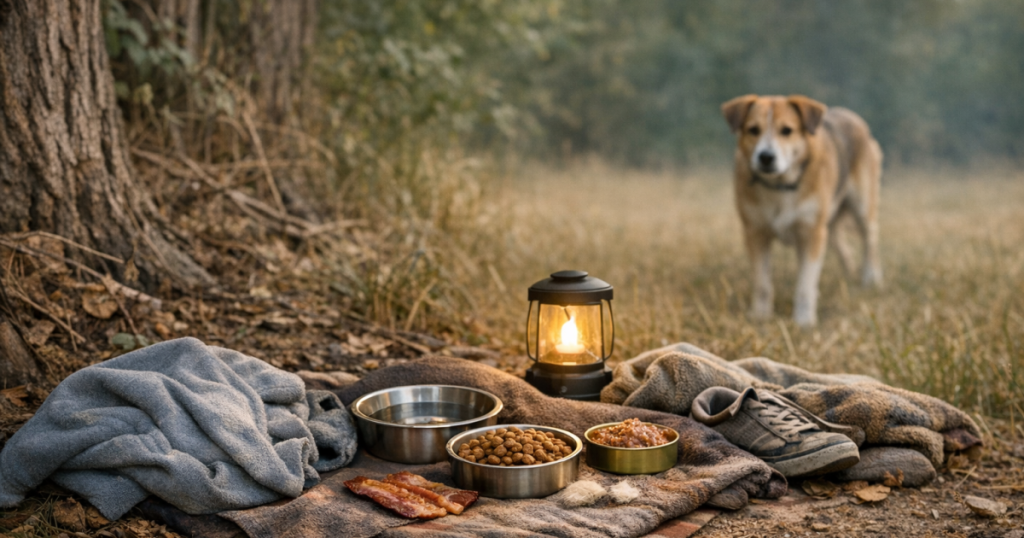
When a dog disappears, panic makes it tempting to drive everywhere, call loudly, and keep moving. But scent stations for lost dogs can give a frightened pet something steady to recognize: the smell of home, their person, or their own bedding in the place where they may circle back.
A scent station is not a magic lure, and it will not replace posters, shelter calls, neighbor alerts, or a GPS tracker if your dog is wearing one. Used well, it is a quiet recovery anchor that helps your dog make a safe decision when stress, darkness, traffic, or unfamiliar ground has disrupted their normal behavior.
Live trapping and searches on restricted property should be handled by local animal control or an experienced lost-pet recovery professional to comply with local ordinances, property rules, and safety requirements.
The short version
- Place familiar, unwashed scent items near the last confirmed location, the escape point, or another safe return route.
- Choose a quiet spot away from busy roads, steep drop-offs, livestock, aggressive dogs, and heavy foot traffic.
- Use the dog’s own bedding, a worn shirt from a primary caregiver, a leash, or a crate mat rather than perfume, detergent, or unfamiliar food smells.
- Do not chase, crowd, or repeatedly call if the dog is skittish. Let the scent station do quiet work while you monitor from a distance.
- Combine scent work with verified sightings, shelter reports, microchip alerts, neighborhood notices, and any tracker data you have.
How a scent station helps a lost dog think clearly
Lost dogs often behave differently than they do at home. A social dog may go silent. A confident dog may bolt from friendly strangers. A recall-trained dog may hear their name and keep running because they are in survival mode, not obedience mode.
A scent station gives that dog a familiar cue without pressure. The smell of a slept-in T-shirt, a crate blanket, or the leash used on daily walks can help a dog identify a place as safe. This matters most when the dog is close enough to revisit the area but too scared to approach people.
The goal is not to pull a dog from miles away. Wind, terrain, rain, humidity, traffic, and the dog’s own movement all affect scent. The realistic goal is to help a dog who is nearby, looping back, hiding, or traveling familiar edges choose a calmer route back toward safety.
Step 1: Mark the last reliable point before you place anything
Before setting up a station, write down the most reliable information you have. This prevents well-meaning helpers from scattering scent items in random places and confusing the search plan.
- The exact escape point, such as a gate, car door, campground site, trailhead, hotel parking lot, or backyard fence line.
- The last confirmed sighting from a person who saw the dog clearly, not a vague neighborhood rumor.
- The dog’s likely direction of travel based on terrain, roads, water, woods, alleys, or familiar walking routes.
- Places the dog already knows, including home, a frequent park entrance, a relative’s house, or the vehicle they often ride in.
If your dog was wearing a tracker, use the last update as one clue, not the whole answer. Cellular coverage, battery status, building interference, and terrain can all affect what you see. For prevention planning after this scare, the GPS dog tracker recovery planning guide explains how trackers fit into a broader lost-dog plan.
Step 2: Choose scent items your dog already trusts
The best scent items are ordinary, familiar, and unwashed. You are trying to create recognition, not a strong artificial smell.
- A shirt, sweatshirt, or pillowcase recently used by the person the dog is most bonded to.
- The dog’s bed cover, crate mat, blanket, harness, leash, or favorite soft toy.
- A towel used after a recent bath or swim, as long as it has not been washed afterward.
- A small amount of the dog’s own fur from a brush, if you have it available.
Avoid freshly laundered items with detergent scent, heavily scented candles, essential oils, perfume, or anything that smells more like the laundry room than the household. Also avoid leaving important valuables outside. A worn T-shirt can help; your only winter coat or your dog’s only ID collar should not be sacrificed to the weather or passing strangers.
Step 3: Put the station where return is safe
Placement matters more than quantity. One well-placed scent station is usually more useful than several scattered piles that encourage helpers to keep entering the area.
Near home after a door dash or fence jump
For a dog who escaped from home, place scent near the gate, porch, garage, or a sheltered side yard where the dog can approach without crossing a busy street. If your dog normally enters through a back door or side gate, use that familiar route. Leave the access point safe and contained when possible so the dog does not bolt again after returning.
At a trailhead or campground
For a dog lost during a hike or camping trip, the vehicle can become the strongest recovery point. If allowed and safe, place scent items near the vehicle, campsite, or trailhead sign rather than deep in the woods. A panicked dog may follow paths, service roads, creek lines, or the route back to the car.
After a car accident or travel escape
Travel escapes are especially disorienting because the dog may not know the surrounding neighborhood. Put scent near the last confirmed point only if it is safe and legal. If the dog escaped near a highway, airport, rest area, or industrial property, coordinate with animal control, highway patrol, property managers, or park staff instead of placing items in dangerous zones.
Step 4: Set it up quietly
A basic station does not need to be elaborate. Keep it simple, low, and stable.
- Lay the scent item flat or drape it over a low bush, porch rail, crate, or fence where air can move through it.
- Add a bowl of water if the location is safe, shaded, and easy to monitor.
- If your dog is crate-trained and the crate is familiar, leave the crate open in a sheltered, quiet spot. Do not use a crate that the dog fears.
- Place a weather-safe lost dog note nearby for people, not for the dog. Include a request not to chase and a phone number.
- Refresh or replace scent items daily when possible, especially after rain, heavy wind, sprinkler use, or snow.
Food is more complicated. Strong-smelling food may attract raccoons, coyotes, loose dogs, cats, or curious people. If an experienced recovery helper recommends food, use a small, supervised amount and remove leftovers. In many situations, water and familiar scent are the safer first move.
Step 5: Back away and watch the area intelligently
The hardest part is leaving the station alone. Owners naturally want to call, whistle, cry, and walk the area over and over. To a frightened dog, that activity can feel like pressure.
Once the station is placed, reduce traffic around it. Watch from a parked car, a nearby window, or a quiet distance if you can do so safely. Ask neighbors to report sightings without approaching. If someone sees your dog, the best instruction is usually simple: do not chase, do not shout, do not follow closely, and call the owner immediately.
If you use cameras, make sure they are allowed where you place them and angle them toward your own property or an approved area. A camera can confirm whether the dog is returning at night, whether wildlife is interfering, or whether the scent station has been moved.
Step 6: Match the station to your dog’s personality
A scent station should reflect the dog you are trying to bring home. The setup for a bold Labrador who escaped from a backyard is different from the setup for a newly adopted rescue who slipped a harness in a parking lot.
- Friendly door-dashers: Place scent near the familiar entry point and alert nearby neighbors. These dogs may return quickly if the house feels calm.
- Skittish rescues: Use fewer people, less noise, and a more hidden station. Avoid search parties walking directly through the area.
- Hiking dogs: Anchor scent at the trailhead, vehicle, campsite, or the last confirmed junction. Do not assume the dog will keep moving forward on the same trail.
- Rural or hunting dogs: Consider wind, livestock, property boundaries, and remote coverage gaps. Coordinate with landowners before entering fields, barns, or wooded parcels.
- Small dogs: Choose protected spots where the dog can approach without exposure to larger animals, open roads, or heavy foot traffic.
If you are reviewing your gear after the recovery, the Dog Tracker Comparison Database can help you compare tracking method, coverage dependency, weight, water resistance rating, attachment style, and intended use scenario without treating any device as foolproof.
Common mistakes that slow a recovery
- Moving the station too often: A dog may return after you leave. Constant relocation removes the stable point you were trying to create.
- Letting too many helpers visit: Extra cars, voices, flashlights, and unfamiliar scent can make a fearful dog avoid the area.
- Putting it beside traffic: A return point should not lure a dog across a busy road or into a dangerous shoulder.
- Washing the items first: Clean laundry may smell comforting to you, but it is weaker as a familiar scent cue.
- Posting chase instructions online: Public posts should ask for sightings, direction of travel, photos if safe, and immediate calls, not pursuit.
- Relying on scent alone: Keep calling shelters, checking found-pet pages, updating microchip information, and documenting verified sightings.
Night checks without creating a new risk
Many lost dogs move at dawn, dusk, or overnight when the world feels quieter. That does not mean owners should wander dark roads alone or shine lights into every yard. Keep night checks calm and deliberate.
- Drive slowly through likely routes with a second adult handling calls and notes.
- Carry a flashlight, but avoid spotlighting the dog directly if they are fearful.
- Wear reflective clothing and stay off road shoulders when traffic is active.
- Use soft, familiar sounds only when the dog is close and calm, such as opening a treat pouch or gently saying their name.
Once your dog is home, visibility gear can reduce future scares during evening walks. Our review of night visibility add-ons is useful if darkness was part of the escape or search conditions.
When to change the plan
A scent station is worth maintaining while you have credible reason to believe the dog is nearby or may circle back. Change tactics when evidence points elsewhere. That evidence might be repeated sightings several blocks away, a tracker update in a new area, shelter intake information, or camera footage showing the dog has shifted routes.
Do not abandon the original station too quickly if it is safe and easy to monitor. Dogs sometimes travel out and loop back, especially near home, a vehicle, or a campsite. Instead of moving everything, consider keeping the primary station in place and adding a second station only when there is a strong, verified reason.
FAQ
How long should I leave a scent station out?
Leave it as long as the location remains safe, permitted, and relevant to the dog’s last confirmed movement. Refresh the scent daily when possible and reassess after new sightings.
Should I sleep outside near the scent station?
Only if the area is safe and your presence will not pressure the dog. For fearful dogs, quiet monitoring from a car or nearby home is often calmer than sitting beside the station.
Can a scent station bring a dog back from miles away?
Usually not by itself. It is most useful when the dog is nearby, circling, hiding, or returning to a familiar point. Use sightings and tracker data to guide placement.
Is it okay to leave my dog’s favorite toy outside?
Yes, if it carries familiar scent and you can afford to lose it. Avoid leaving critical gear, medication, expensive items, or the only collar with ID attached.
What should I do if I see my dog near the station?
Do not run toward them. Sit or crouch sideways, keep your voice soft, avoid direct staring, and let the dog choose to approach. Call for experienced help if they remain trap-shy or panicked.
Final thoughts
Using scent stations for lost dogs is about giving your dog a quiet way back when fear has taken over. The familiar smell of home can slow them down, help them orient, and make a safe return point feel possible again.
Keep the setup simple, protect the location from unnecessary activity, and let every update guide your next move. The strongest recovery plans combine calm scent placement with verified sightings, local coordination, clear public instructions, backup ID, and realistic expectations about technology. No single tool brings every dog home, but a steady, familiar scent can be the detail that helps a scared dog finally stop running.